Treatment guide

Hair Transplant Turkey: Cost, Safety, Techniques and Results

Updated Kasım 26, 2026 · 11 min read
Hair Transplant Turkey

Short answer

A hair transplant Turkey trip can be safe and good value when a licensed surgeon plans and leads the surgery. Most packages cost $2,500 to $5,000 and include the procedure, hotel and transfers. Results depend on the clinic, not the country, so check who operates, how many grafts they take and what aftercare you get.

Key takeaways

  • Most hair transplant Turkey packages cost $2,500 to $5,000 (about £1,900 to £3,800). That is well below typical prices at home.
  • FUE, DHI and Sapphire FUE can all give natural results. The right one depends on your hair loss, not on marketing.
  • Your donor area is limited. A careful surgeon protects it for life.
  • Ask in writing who performs each step: a surgeon or a technician.
  • Final results take 12 to 18 months, and most of your recovery happens at home.

Many people fly to Istanbul each year for new hair. If you are weighing a hair transplant Turkey package, you likely have two questions. What will it cost? And is it safe? This guide answers both in plain terms. It covers prices, techniques, risks, recovery and how to pick a clinic you can trust.

Turkey is popular because it pairs low prices with deep experience. Wages and running costs are lower, so a clinic can charge less for the same surgery. Many teams do this work every day. Packages also bundle the hotel and transfers, which makes planning simple for patients from abroad.
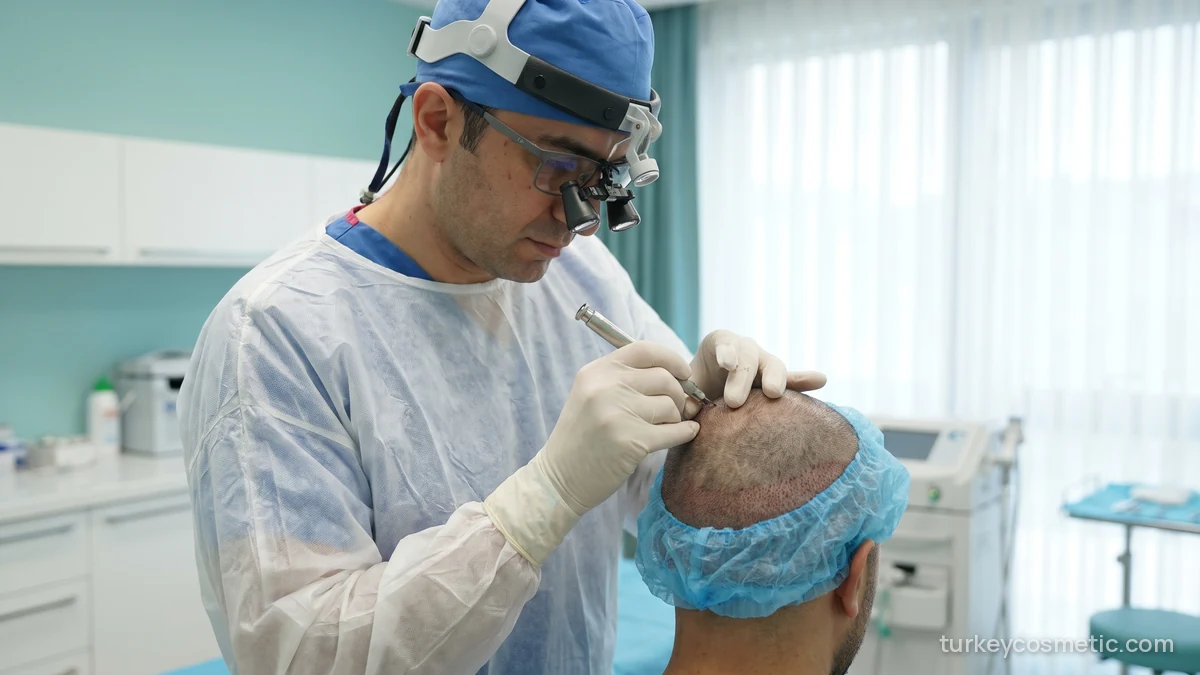
A hair transplant surgeon in gloves and loupes extracting grafts from the shaved back of a patient's head with a micro punch

Istanbul is also easy to reach. It is a short flight from most of Europe, and there are direct flights from North America.

Popular does not mean equal, though. Quality ranges from excellent to poor. The country gives you choice. It does not choose for you.

How Much Does a Hair Transplant in Turkey Cost?

Most packages for a hair transplant in Turkey cost $2,500 to $5,000. That is about £1,900 to £3,800, €2,200 to €4,500, CA$3,500 to CA$7,100 or A$3,700 to A$7,400. The price depends on the technique, the graft count and who performs the surgery.
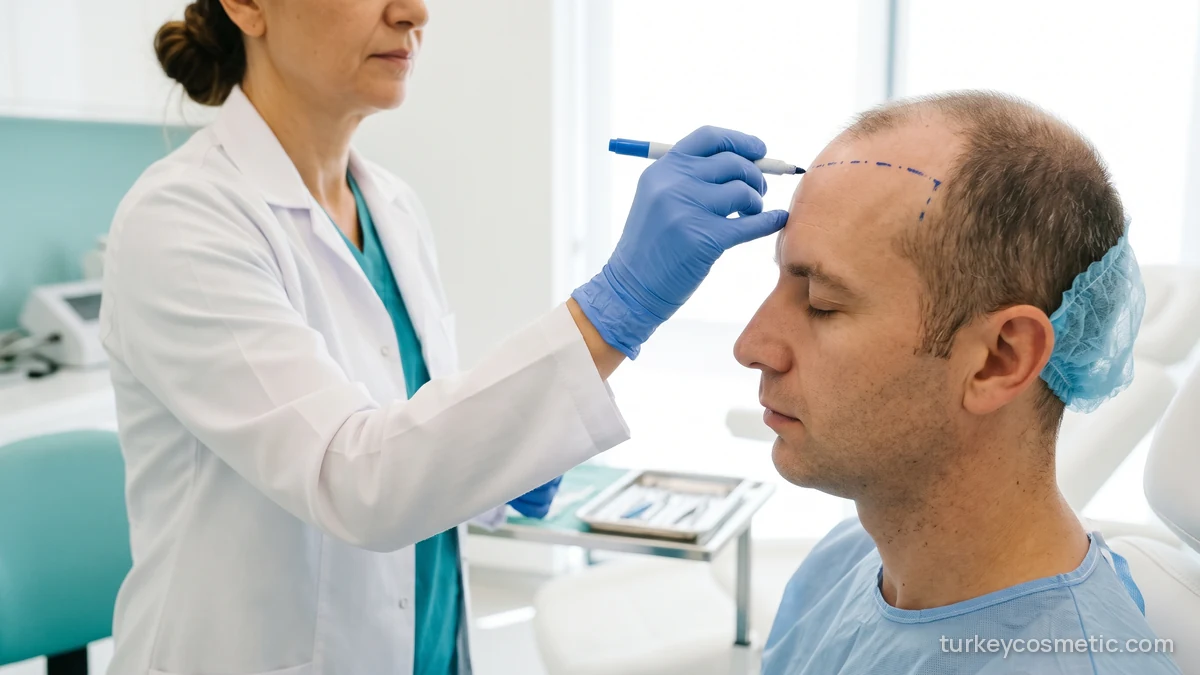
A doctor drawing a new hairline with a marker on the forehead of a man with a receding hairline, eyes closed

The Turkey hair transplant cost is usually a flat package rate. At home, many clinics charge per graft, so large cases get expensive fast. A graft is a tiny group of one to four hairs. Always ask for a written, personal quote.

Be careful with a quote far below the usual range. A clinic can only cut the price so much before it cuts the surgeon’s time.

What a Turkey Hair Transplant Package Includes

A typical package covers:

  • A consultation and hairline plan
  • Blood tests before surgery
  • The surgery itself, with local anesthesia (numbing shots in the scalp)
  • Two or three hotel nights
  • Airport and clinic transfers
  • Medication, the first wash and an aftercare kit

Flights, travel insurance and later treatments are usually extra. Ask for the list in writing.

Turkey vs. the US, UK, Canada, Australia and Ireland

CountryTypical price rangeWhat it usually covers
Turkey$2,500 to $5,000 (most packages)Surgery, hotel, transfers, medication
United States$8,000 to $15,000Surgery only
United Kingdom£3,000 to £10,000Surgery only
CanadaCA$10,000 to CA$20,000Surgery only
AustraliaA$6,000 to A$20,000Surgery only
Ireland€2,900 to €9,500Surgery only

These ranges come from published clinic prices in 2026. They shift with the number of grafts. Add flights and time off work to the Turkey hair transplant cost before you compare.

FUE, DHI and Sapphire FUE: Which Technique Is Right for You?

All three methods move healthy hair from the back and sides of your head to the thin areas. They differ in the tools used to place each graft. FUE is the standard choice for larger areas. Sapphire FUE refines the channel step. DHI suits small zones and less shaving.

FUE, Sapphire FUE and DHI compared

TechniqueHow it worksOften suitsKeep in mind
FUE (follicular unit extraction)Grafts are removed one by one with a tiny punch. They go into small channels cut with a steel blade.Larger bald areasThe head is usually shaved.
Sapphire FUEThe same steps, but the channels are opened with fine sapphire blades.Hairline work and dense packingOften priced a little higher.
DHI (direct hair implantation)Each graft is loaded into an implanter pen, also called a Choi pen, and placed in one move.Smaller areas and patients who want less shavingSlower, so fewer grafts fit in one session.

No method is best for everyone. The skill of the team matters more than the name of the tool. A good surgeon explains why FUE or DHI fits your scalp.

Many Istanbul clinics also blend methods. They may use Sapphire FUE for the channels and DHI pens for the hairline. FUE leaves tiny dot scars in the donor area, which short hair usually hides.

How Does a Hair Transplant Turkey Trip Work, Step by Step?

Most trips last three or four days. You send photos first and get a plan. Then you fly to Istanbul, meet the surgeon and have surgery the next day. After a check and a first wash, you fly home. The usual steps are:
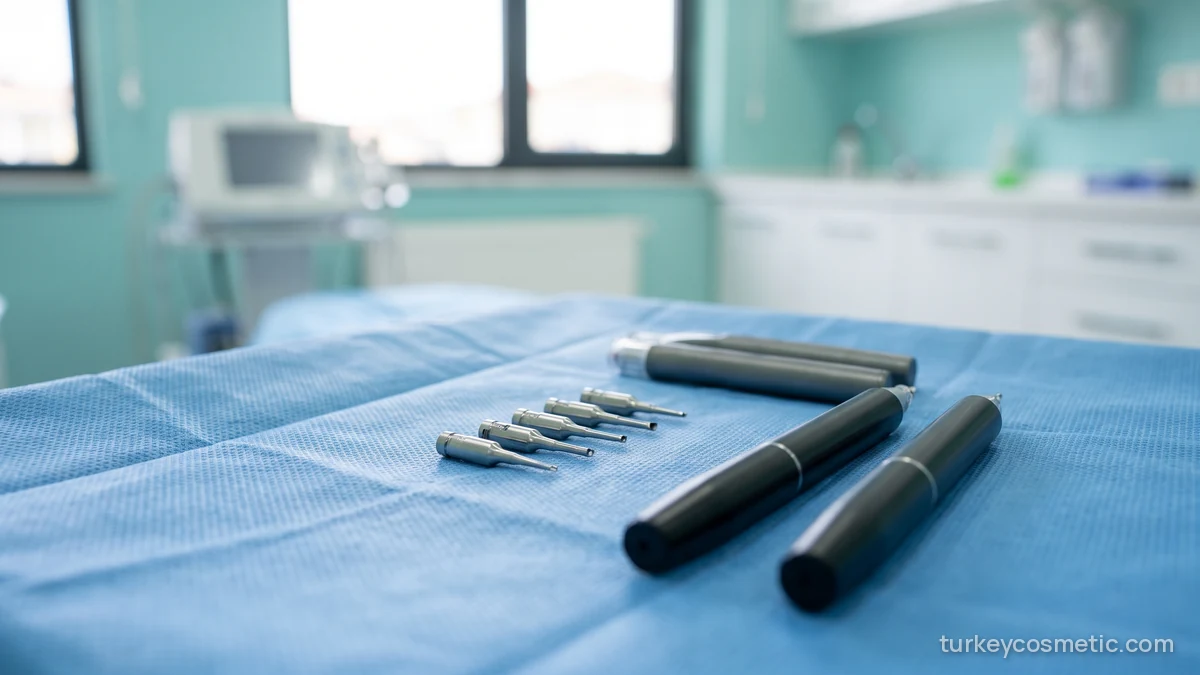
Close-up of FUE micro punch tips and two DHI implanter pens neatly arranged on a sterile blue drape

  1. Online review. You send photos and your medical history. The clinic sends back a plan and a quote.
  2. Arrival in Istanbul. A driver takes you to your hotel.
  3. Consultation. The surgeon checks your donor area, draws the hairline and orders blood tests.
  4. Surgery day. Your scalp is numbed. The team removes the grafts, opens the channels and places each graft. This takes six to eight hours.
  5. Check and first wash. The next day, staff check the scalp and show you how to wash it.
  6. Flight home. Most patients fly on day three or four.
  7. Follow-up. You send photos at set times over the next 12 months.

Is It Safe to Get a Hair Transplant in Turkey?

Yes, it can be safe when a licensed doctor operates in a licensed facility. A hair transplant is real surgery under local anesthesia, and serious problems are uncommon in skilled hands. The risk rises at high-volume clinics where staff with no medical training do the work. Safety depends on the clinic you choose.

The Risks of a Hair Transplant in Turkey

Every surgery has risks. For this one, they include:

  • Infection, bleeding or swelling
  • Numbness in the scalp, which usually fades
  • Patchy growth when grafts do not survive
  • A hairline that sits too low or looks too straight
  • Overharvesting, which means too many grafts are taken and the donor area stays thin for good
  • Shock loss, a short-term shedding of nearby hair

Travel adds its own issues. Your surgeon is far away once you are home. If a problem starts there, you will need a local doctor to see you.

Red Flags When Choosing a Clinic

  • No named doctor on the plan
  • “Unlimited” or very high graft promises for every patient
  • Guaranteed results
  • Pressure to pay a deposit today
  • A price far below the usual range
  • No written plan or consent form

Will a Surgeon or a Technician Perform the Surgery?

Turkish rules make a doctor responsible for the surgery. In practice, trained technicians often help to place grafts. That can work well. But the key steps belong to the surgeon. These are the hairline plan, the numbing and the channel opening. Ask for the surgeon’s name. Ask which steps the surgeon does, and get the answer in writing.

How to Choose a Hair Transplant Turkey Clinic

Use this short checklist before you pay for any hair transplant Turkey package:

  • License. Clinics that treat foreign patients need a health tourism authorization from the Turkish Ministry of Health. Ask to see it, along with the facility license.
  • Surgeon. Get the name, the diploma and the years of experience.
  • Workload. Ask how many patients the surgeon treats per day.
  • Graft plan. The number should match your donor area, not a sales target.
  • Proof. Ask for unedited results from cases like yours, taken at 12 months.
  • Aftercare. Know who answers your questions once you are home, and how fast.

Hair Transplant Turkey Before and After: What Results to Expect

Expect slow change, not an instant result. The moved hairs shed in the first weeks. They regrow from month three or four. Most people see a clear change by month six to nine. The final result takes 12 to 18 months. Judge any before and after photo against this timeline.

Hair transplant results timeline

  1. DAYS 1 TO 10Redness and small scabs, which wash away
  2. WEEKS 2 TO 8The new hairs shed. This is normal.
  3. MONTHS 3 TO 4Fine new hairs appear
  4. MONTHS 6 TO 9Clear growth and better cover
  5. MONTHS 12 TO 18Final density and texture

When you study photos, check the details. The light and hair length should match. The donor area should be shown. The time since surgery should be stated.

One more point. A transplant does not stop future hair loss. Your own hair may keep thinning, so your doctor may talk to you about medicine to protect it.

Recovery and Aftercare Once You Fly Home

After a hair transplant in Turkey, most of your recovery happens at home. These habits protect the new grafts:

A man with a freshly shaved head wearing a headband and resting on a travel neck pillow in a hotel room

  • Sleep with your head raised for the first week.
  • Wash your scalp the way the clinic showed you.
  • Do not scratch or pick the scabs.
  • Skip the gym, swimming and strong sun for a few weeks.
  • Avoid smoking and alcohol while you heal.

Many people return to desk work within a week. Call a doctor if you get a fever, pus, spreading redness or pain that gets worse.

Who Is a Good Candidate, and How Many Grafts Do You Need?

Good candidates have stable hair loss, a healthy donor area and realistic goals. You may be asked to wait if you are very young or your loss is moving fast. Tell the doctor about any illness and any medicine you take, such as blood thinners.
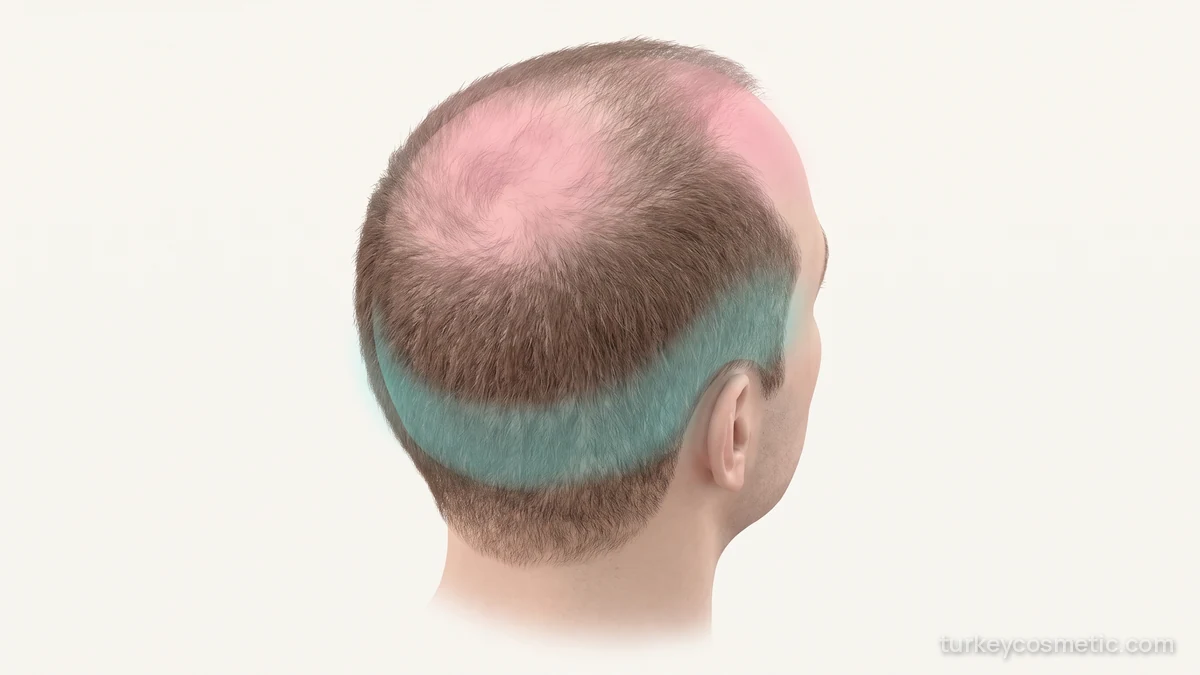
3D render of the back of a male head showing the donor area used for hair grafts

Doctors grade male hair loss on the Norwood scale, from stage 1 to stage 7. Small hairline work may need 1,500 to 2,500 grafts. Larger areas may need 3,000 to 4,000, or two sessions. Your donor area can give only a few thousand grafts in a lifetime. Spend them with care.

Questions Patients Ask on Forums

If a Turkish hair transplant goes wrong, can it be fixed?

Sometimes. A poor hairline can often be improved by moving or adding grafts. A drained donor area is much harder to repair, because that hair does not grow back. Before you book, ask who treats problems, who pays for it and whether you get your records.

Is 5,000 grafts in one session too many?

It can be. Taking more than the donor area can spare leaves it thin. Very long sessions may also lower graft survival, since grafts stay outside the body longer. Many surgeons split large cases over two days or two sessions.

Can a technician do a good job?

Skilled technicians place grafts well, and patients disagree on how much the title matters. Still, ask who will work on you that day and what training they have. The surgeon should plan and lead the case.

How many days should I stay in Turkey after surgery?

Most patients stay three or four days in total. One extra day gives time for a calm check and first wash. A longer stay is a comfort choice. Follow your surgeon’s advice on when to fly.

Do I have to plan the trip myself?

Usually not. Most clinics arrange the hotel and transfers. You book the flights. A common plan is arrival and consultation on day one, surgery on day two, a check on day three and the flight home on day four.

Hair transplant in Turkey as one package

What a typical package covers

  • ConsultationAnd a hairline plan
  • Blood testsBefore surgery
  • SurgeryWith local anaesthesia
  • HotelTwo or three nights
  • TransfersAirport and clinic
  • Aftercare kitMedication and the first wash
Most packages in Turkey$2,500–$5,000
UK clinics (surgery only)£3,000–£10,000

Ask what the price leaves out and get the plan in writing.

Many patients who travel for a hair transplant also ask about other treatments. Our guides to Turkey teeth and facelift in Turkey explain cost, safety and recovery in the same way.

Frequently Asked Questions

Does a hair transplant hurt?

The numbing shots sting for a few minutes. After that, most patients feel pressure and pulling but little pain during surgery. The scalp can feel tight and sore for a few days. Simple pain relief is usually enough. Tell the team at once if you feel sharp pain, so they can add more numbing.

Is a Turkish hair transplant permanent?

The moved hairs come from an area that resists pattern baldness, so they usually keep growing for many years. That is why the result is seen as long-lasting. The hair around them is different. It can still thin with age, so some patients need medicine or a second session later in life.

Do I need to shave my head?

For most FUE cases, yes. A shaved head lets the team see and remove each graft safely. DHI and some other methods allow partial shaving, where only the donor strip is cut short. This suits small cases best. Ask what is possible for your hair before you book the trip.

Can women have a hair transplant in Turkey?

Yes, if the cause of the hair loss is known and the donor area is strong. Women often have diffuse thinning, which spreads over the whole scalp and can make surgery a poor fit. Many types of thinning respond to other care. So a blood test and a scalp exam should come before any surgery plan.

Is a Turkey hair transplant worth it?

It can be, if you choose with care. The savings are real, and skilled teams work there. The risks of a rushed choice are real too, and a poor result is hard to undo. Take your time. Compare the surgeon, the plan and the aftercare, not just the price.

This guide gives general information and is not personal medical advice. Prices are ranges, not fixed fees. Ask a qualified doctor to examine you, and get a written quote made for your case.

Get your Hair Transplant Turkey plan · reply in your language