Treatment guide

Facelift Turkey: Cost, Types, Recovery and Safety

Updated Kasım 26, 2026 · 14 min read
Facelift Turkey
Short answer

A facelift Turkey package usually costs €4,000–€6,000, with the hospital, hotel and transfers included. In the UK, the same surgery costs £9,000–£20,000. A facelift lifts loose skin and deeper tissue in the lower face and neck. Most patients stay seven to ten days. Results often last around ten years.

Key takeaways

  • Facelift Turkey prices run from €4,000 to €6,000, less than half of UK and US fees, and the hotel and transfers are included.
  • The main options are the mini facelift, the SMAS facelift, the deep plane facelift and the neck lift.
  • Plan to stay seven to ten days. Most patients fly home 10 to 14 days after surgery.
  • Swelling and bruising fade over two to three weeks. The final result shows at three to six months.
  • Check that your surgeon is a plastic surgery specialist and that the hospital is licensed and accredited.

A facelift is one of the most reliable ways to treat a sagging jawline and a loose neck. It is also one of the most costly operations in private care at home. That is why so many patients from the UK and the US now search for “face lift Turkey” and fly to Istanbul.

This guide explains the surgery in plain words. You will learn what a facelift costs, who it suits, how recovery goes and what the risks are. You will also learn how to judge a surgeon before you book a flight.

What Is a Facelift?

A facelift is an operation that lifts and tightens the lower two thirds of the face and the neck. Doctors call it a rhytidectomy, which simply means the removal of wrinkles. The surgeon moves the deeper tissue back to where it used to sit, then trims the spare skin. The aim is a fresher look, not a new face.

With age, the skin loses its stretch and the fat pads of the cheeks slide down. Jowls form along the jaw. These are the soft folds that blur the jawline. Bands may appear in the neck as well.

A facelift treats these changes well. It does not treat the forehead or the eyelids, and it does not change the surface of the skin. Fine lines, sun damage and age spots need other care. For this reason, many patients add eyelid surgery or fat grafting, which means moving a little of your own fat into hollow areas.

Why Do Patients Choose a Facelift in Turkey?

Patients choose Turkey for three main reasons: lower prices, short waiting times and surgeons who perform this operation very often. Running costs, wages and the exchange rate keep fees down. Many hospitals in Istanbul also have teams set up for visitors from abroad, with interpreters and airport transfers included.
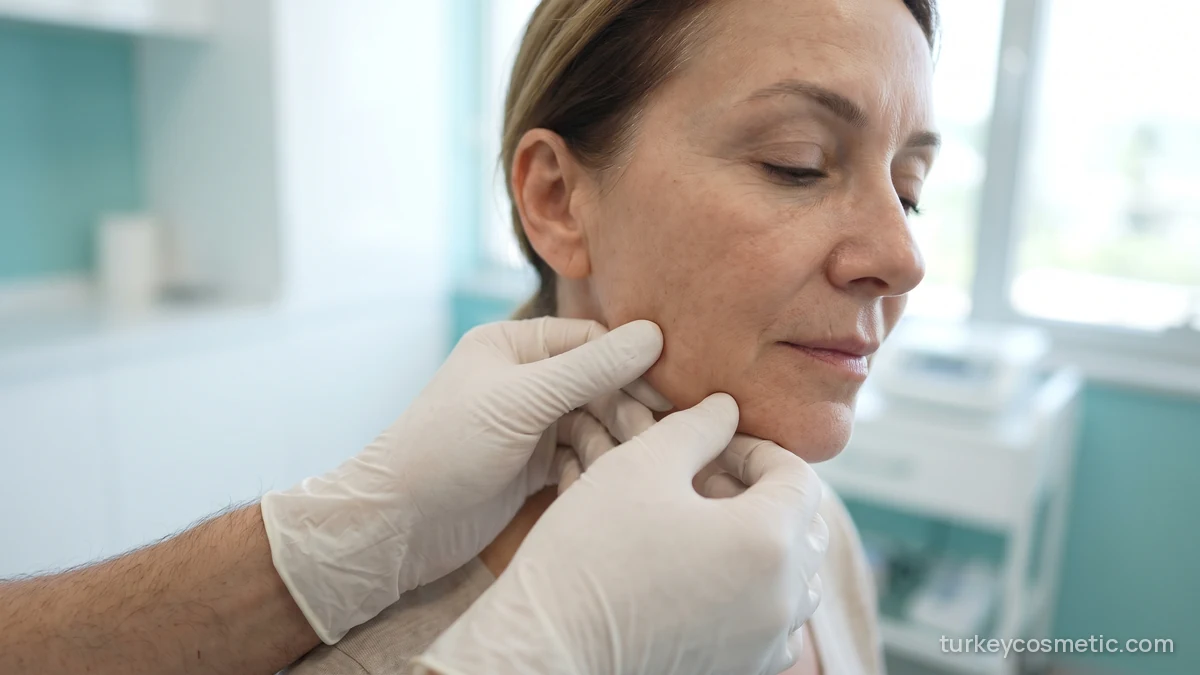
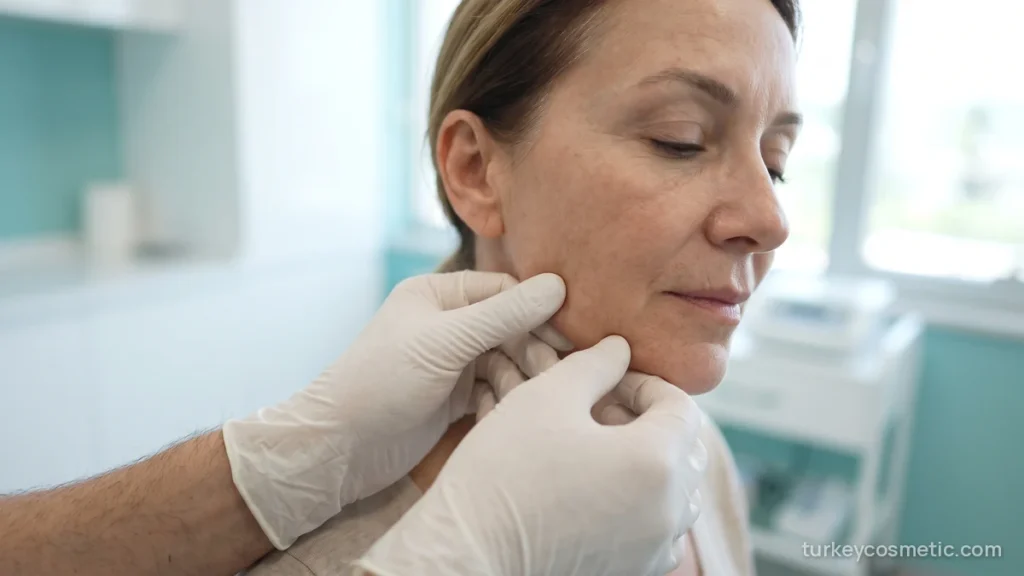
A surgeon in white gloves gently lifting the cheek and jawline skin of a woman in her late fifties to assess laxity

The lower facelift cost does not mean lower grade materials. A hospital in Istanbul pays far less for staff, rent and insurance than one in London or New York. The saving is passed on to the patient.

Experience matters too. A surgeon who performs several facelifts each week keeps their skills sharp. Still, Turkey has both excellent and poor facelift providers, like every country. The work of choosing well is yours, and this guide shows you how to do it.

Facelift Turkey Cost: How Much Is a Facelift in Turkey?

A facelift in Turkey costs about €4,000 to €6,000 in 2026. This is usually an all-inclusive price. It covers the surgery, the hospital night, the hotel and your local transfers. The exact fee depends on the technique, the surgeon, the hospital and any extra procedures you add.

These figures are guide ranges, not fixed prices. Your own quote comes after the surgeon has seen your photos and your medical history.

Facelift Cost: Turkey vs UK and US

The table below compares typical private prices for a full facelift in the three countries.

CountryTypical priceWhat the price covers
Turkey€4,000–€6,000Surgery, hospital night, hotel, transfers, interpreter and check-ups
UK£9,000–£20,000Surgery and hospital care; hotel and travel not included
US$12,000–$25,000Surgeon's fee; the anaesthetic and operating room are often billed on top

Prices are approximate and vary by clinic and technique. Even after you add flights, the cost in Turkey is usually well under half of the cost at home.

What Is Included in a Facelift Package?

A facelift package in Turkey usually covers the surgery, the hospital stay, the hotel and local transfers in one price. This all-in model is common in Istanbul and makes it easier to plan your budget. Flights are rarely part of the deal, so add them to your own sums.

A typical package includes:

  • the surgeon’s fee, the anaesthetic and the operating room
  • blood tests and checks before surgery
  • one night in hospital
  • hotel nights for the rest of your stay
  • transfers between the airport, the hotel and the hospital
  • an interpreter, medicines and a support garment
  • check-ups before you fly home

Ask in writing what happens if you need a longer stay or a second procedure, and who pays for it.

Mini Facelift and Deep Plane Facelift Turkey Prices

A mini facelift sits at the lower end of the price range because it is shorter and treats a smaller area. A deep plane facelift sits at the upper end, or a little above it, because it takes longer and demands more training. If two facelift quotes for the same technique differ widely, ask why. A very low price can mean a short hospital stay, a junior surgeon or weak aftercare.

Who Is a Good Candidate for a Facelift?

A good candidate is a healthy adult with sagging in the lower face or neck that bothers them. Most patients are between 40 and 70, but skin quality matters more than age. You should not smoke, your weight should be stable, and you should hope for a natural change.
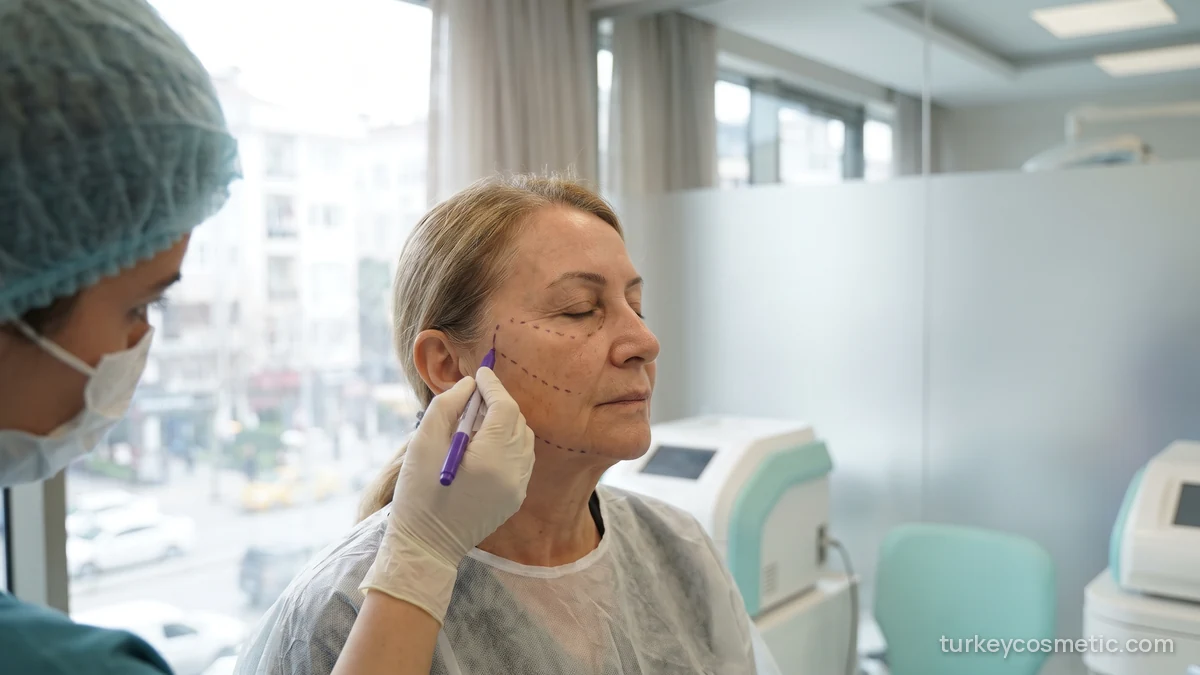
A plastic surgeon drawing light pre-operative marker lines in front of the ear of a mature woman, side profile, eyes closed

You may be well suited to the surgery if you have:

  • jowls or a soft, blurred jawline
  • deep folds between the nose and the mouth
  • loose skin or bands in the neck
  • cheeks that have dropped and flattened

The operation may not be right for you at present if you smoke and cannot stop, or if you have poorly controlled blood pressure, diabetes or a bleeding problem. Blood thinning medicines also need a careful plan. Tell your surgeon about every medicine and supplement you take.

Smoking deserves a special note. Nicotine narrows the small blood vessels that feed the skin. This raises the risk of poor healing. You will be asked to stop at least four weeks before and four weeks after surgery.

What Are the Different Types of Facelift?

The main types are the mini facelift, the SMAS facelift, the deep plane facelift and the neck lift. They differ in how deep the surgeon works and how much of the face is treated. The right choice depends on your anatomy and on how far the tissue has dropped, not on fashion.

Types of facelift compared

Your surgeon suggests a type after examining your face and neck.

Best forTime in theatreTime off work
Mini faceliftEarly jowls and mild sagging1.5–2 hours1–2 weeks
SMAS faceliftLower face and neck3–4 hours2–3 weeks
Deep planeCheeks, jowls and neck4–5 hours2–3 weeks
Neck liftLoose neck and jawline2–3 hoursAbout 2 weeks

Mini Facelift

A mini facelift uses shorter cuts in front of the ear. It suits people in their forties and fifties with early changes. It does little for the neck, and the result may not last as long as a full lift.

SMAS Facelift

The SMAS is a firm layer of tissue under the skin that covers the muscles of the face. In this technique, the surgeon tightens that layer and then lays the skin back without tension. It is the classic full facelift and it remains a safe, proven choice.

Deep Plane Facelift

In a deep plane facelift, the surgeon works under the SMAS layer and frees the bands that hold the cheek down. The skin and the deeper tissue then move as one unit. This can lift the mid-face well. It needs a surgeon with specific training, because the nerves of the face lie close by.

Neck Lift

A neck lift tightens the platysma, the thin muscle at the front of the neck, and removes loose skin under the chin. It is often done with a facelift in the same session, as the face and neck age together.

How Is a Facelift Performed?

A facelift is performed in a hospital operating room, usually under general anaesthesia, and takes two to five hours. The surgeon makes cuts around the ear, lifts the deeper tissue, removes spare skin and closes the wounds with fine stitches. Most patients spend one night in hospital afterwards.
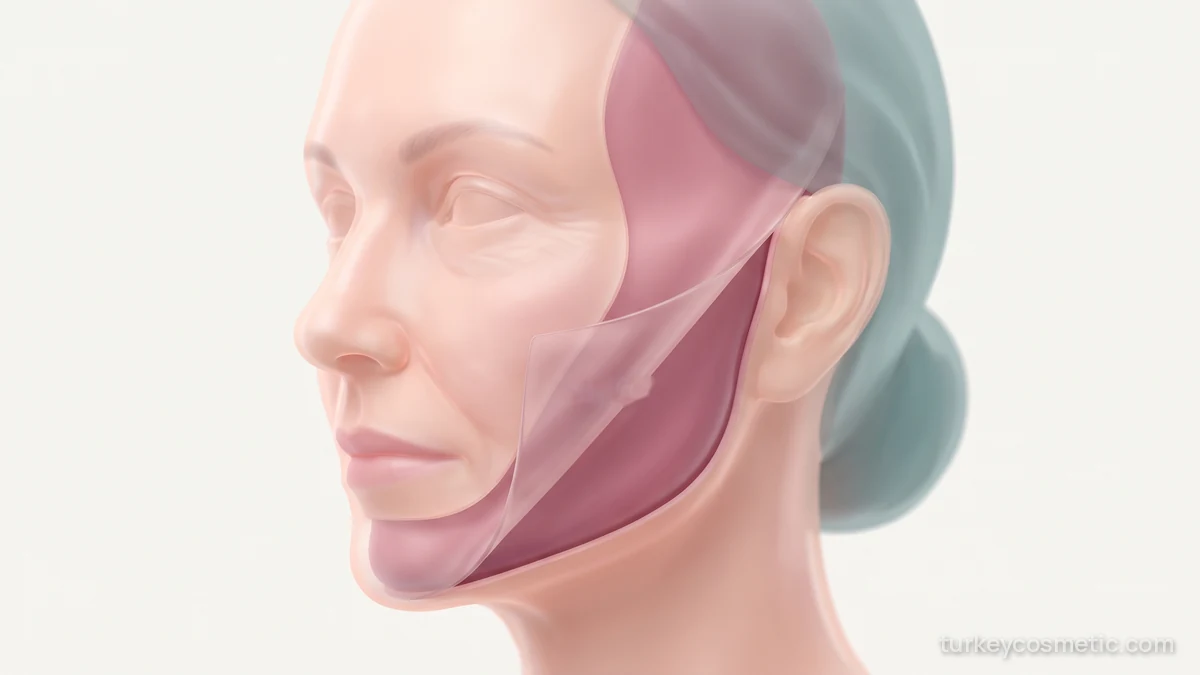
Side view of a mature female face with a semi-transparent skin layer revealing the smooth SMAS tissue layer beneath

The steps on the day are as follows:

  1. Consultation and marking. The surgeon examines your face, confirms the plan and draws guide lines on the skin.
  2. Anaesthesia. You are put to sleep by an anaesthetist. A mini facelift may be done with sedation instead.
  3. Incisions. The cuts start in the hairline at the temple, run in front of the ear and curve behind it.
  4. Lifting. The deeper layer is tightened or moved upwards. Fat may be shaped or removed.
  5. Skin trimming. The skin is laid back gently and the spare skin is cut away.
  6. Closure. The wounds are stitched. Small drains may be placed to collect fluid.
  7. Dressing. A soft bandage supports the face and neck for the first night.

How Long Does It Take to Recover From a Facelift?

Most people need two to three weeks before they feel ready for work and social life. Swelling and bruising are at their worst on days two and three, then fade steadily. Stitches come out within five to ten days. The final result takes three to six months to settle.
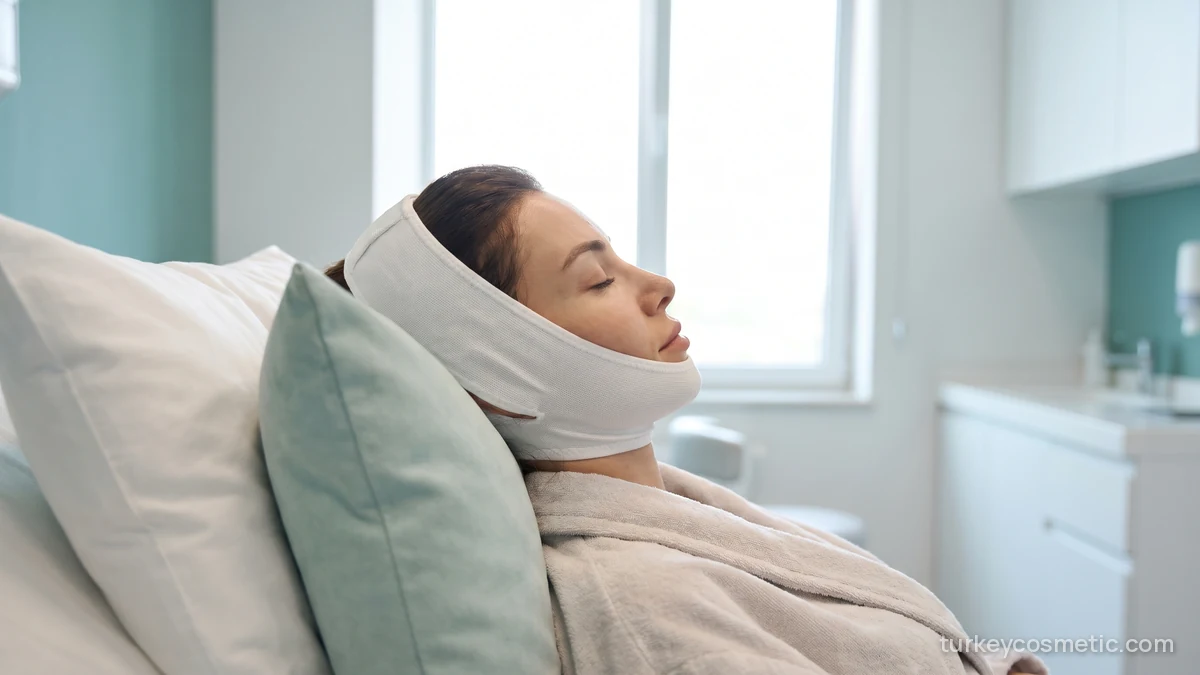
A woman with a white elastic facial compression wrap around her chin and head resting on pillows, eyes closed

Facelift recovery timeline

A typical guide. Your surgeon's advice always comes first.

  1. DAY 1Hospital nightDressings and drains.
  2. DAYS 2–3Peak swellingBruising peaks; drains are removed.
  3. DAYS 5–10Stitches outCheck-up with the surgeon.
  4. DAYS 10–14Flying homeMost patients fly home.
  5. WEEKS 2–3Desk workMost bruising has faded.
  6. WEEKS 4–6ExerciseExercise can start again.
  7. MONTHS 3–6Final resultScars keep fading for up to a year.

Pain is usually mild and feels more like tightness. Numbness around the ears is normal and can last for some months. Facelift recovery is easier if you plan for it. Sleep with your head raised, avoid bending and lifting, and keep the wounds out of the sun.

When Can You Fly Home After a Facelift in Turkey?

Most surgeons clear patients to fly 10 to 14 days after surgery, once the stitches are out and the wounds have been checked. The American Society of Plastic Surgeons suggests waiting at least seven to ten days after facial surgery. On the flight, drink water and walk the aisle often to lower the risk of a leg clot.

Is Facelift Turkey Surgery Safe, and What Are the Risks?

A facelift is safe when a trained plastic surgeon performs it in a fully equipped hospital, and this is as true in Turkey as anywhere else. Serious problems are uncommon, but no surgery is free of risk. Your safety depends on the surgeon and the hospital, not on the country.
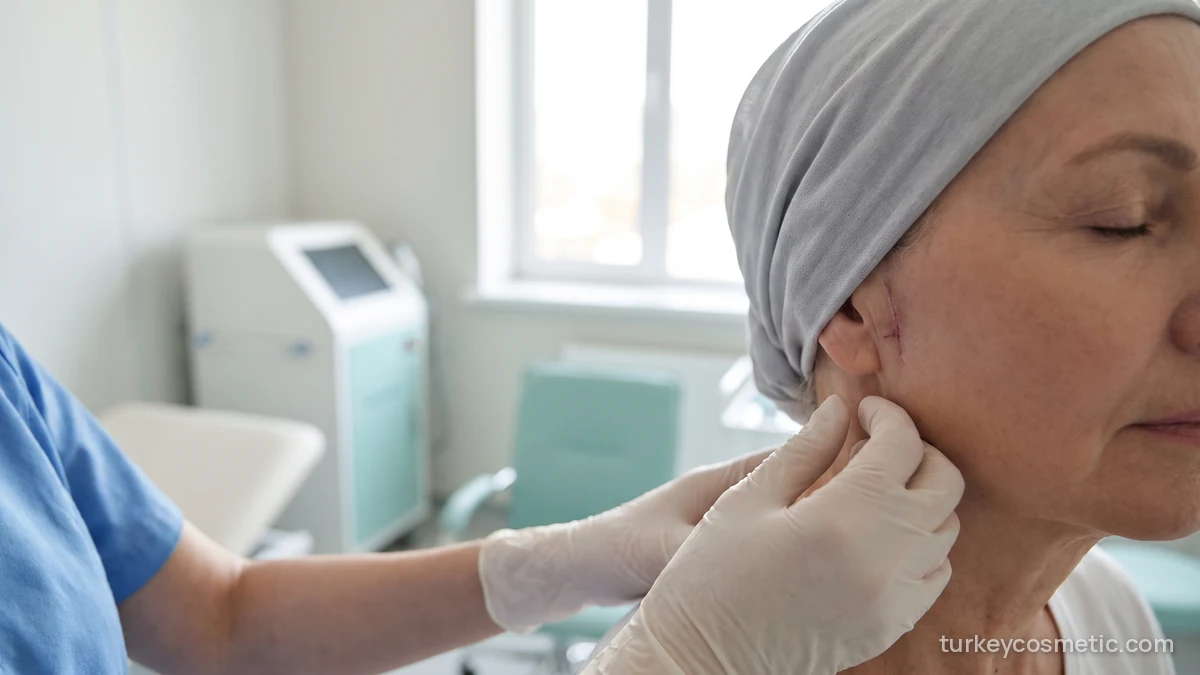
A surgeon in gloves gently checking the healed incision area in front of the ear of a mature woman, eyes closed

The risks you should know about are:

  • Haematoma. This is a collection of blood under the skin. It is the most common problem and usually appears in the first 24 hours. It may need a short return to theatre.
  • Nerve injury. Weakness of part of the face can occur. It is nearly always temporary and settles within weeks or months. Lasting weakness is rare.
  • Poor skin healing. This is much more likely in smokers.
  • Infection. This is uncommon and is treated with antibiotics.
  • Scars and hair loss. A scar can thicken, and hair may thin near the cuts.
  • Uneven result. Small differences between the two sides can remain.
  • General risks. These include reactions to the anaesthetic and blood clots.

Travel adds one more point. If a problem appears after you fly home from Istanbul, your surgeon is far away. Before you book, ask how follow-up works, who you can call at night, and what the clinic will pay for if you need to return. Tell your own doctor about your plans. Public health services at home will treat an emergency, but they do not usually pay to revise private cosmetic surgery.

How to Choose the Best Facelift Surgeon in Turkey

There is no single best facelift surgeon in Turkey. There is a best surgeon for your face. Use these checks to find them:

  1. Specialty. In Turkey, the title to look for is specialist in Plastic, Reconstructive and Aesthetic Surgery.
  2. Experience. Ask how many facelifts the surgeon performs each month and which technique they suggest for you.
  3. Hospital. Surgery should take place in a licensed hospital with intensive care. Ask about the health tourism certificate from the Turkish Ministry of Health and about JCI accreditation, an international quality mark.
  4. Consultation. Speak with the surgeon, not only with a sales adviser, before you pay a deposit.
  5. Results. Ask for photos of patients of your age and face type, taken at least six months after surgery.
  6. Aftercare. Get the follow-up plan and the revision policy in writing.

Facelift Turkey Before and After: What Results Can You Expect?

You can expect a sharper jawline, a smoother neck and fuller, higher cheeks. Friends should think you look rested, not operated on. A facelift commonly takes about ten years off the look of the lower face. It does not stop ageing, and it does not change who you are.

When you study before and after photos, look for the same lighting, the same angle and a relaxed face in both pictures. Check the ears and the hairline. They should look natural, with no pulled earlobes. Be careful with photos taken only days after surgery, when swelling can hide the true result.

Every facelift leaves a scar, but it is placed with care. The scar sits in the hairline and in the natural folds around the ear. It is pink at first and fades over six to twelve months. In most patients it becomes hard to spot.

Facelift in Turkey Reviews: How to Read Them

Patient reviews of face lift Turkey clinics help, but read them with care. Look for detailed accounts on independent platforms, written months after surgery. Give more weight to reviews that describe the facelift recovery and the aftercare, and not only the hotel. Read the negative reviews too, and see how the clinic replied.

How Long Do Facelift Results Last?

Most patients enjoy their result for around ten years, and often longer. A mini facelift tends to last for a shorter time. Technique is only part of the story. Skin quality, sun care, a stable weight and not smoking all help the result to last.

Facelift in Turkey as one package

What a typical package brings together in a single price

  • SurgerySurgeon's fee, anaesthetic and operating room
  • TestsBlood tests and checks before surgery
  • HospitalOne night in hospital
  • HotelNights for the rest of your stay
  • TransfersAirport, hotel and hospital
  • Check-upsBefore you fly home
Most packages in Turkey€4,000–€6,000
UK private surgery£9,000–£20,000

An interpreter, medicines and a support garment are usually included. Flights are rarely part of the deal.

Many facelift patients also ask about other treatments in Istanbul. Our guides to hair transplant in Turkey and Turkey teeth cover cost, safety and recovery.

Facelift Turkey FAQs

Is it safe to have several procedures at the same time?

Often yes, if the plan is sensible. It is common to pair a facelift with eyelid surgery or a lift of the neck. The limit is the time you spend asleep. Many surgeons prefer to keep an operation under six to eight hours. If your list is long, splitting it into two stages is the safer choice.

Is a deep plane facelift longer lasting than a SMAS facelift?

Not always. Both techniques can give lasting, natural results in skilled hands. How long a result lasts depends on more than the method. Your skin, your habits and time itself all play a part. Choose the surgeon first, then let them advise the technique that fits your face.

How long do I need to stay in Turkey for a facelift?

Plan for seven to ten days. This covers the checks before surgery, one night in hospital, removal of drains and stitches, and a final check-up. Some surgeons ask you to stay for up to two weeks, mainly after deep plane or combined surgery, so that early recovery is supervised.

What is the best age for a facelift?

There is no best age. Most patients are between 40 and 70. What matters is how much the tissue has dropped and how healthy you are. People in their forties often suit a smaller lift, while a full facelift is more common from the fifties onwards.

Is it worth travelling from the US for a facelift in Turkey?

It can be. The saving is large, even after flights. The flight is long, though, so allow extra rest before you travel home, and ask your surgeon about preventing blood clots. Arrange video follow-up in advance, and keep copies of your surgery report for your doctor at home.

Does a facelift hurt?

Less than most people fear. You are asleep during surgery and feel nothing. In the first days of recovery, patients describe tightness and a dull ache more than sharp pain. Simple pain relief is usually enough, and the discomfort eases within the first week.

This article is for general information. It does not replace a personal consultation with a qualified plastic surgeon.

FAQ

How long do I need to stay in Turkey?

Most patients stay 6–7 days.

Is the price all-inclusive?

Yes — surgery, hotel, transfers and follow-up are included.

Get your Facelift Turkey plan · reply in your language