Treatment guide

Turkey Teeth: Cost, Risks and What to Expect

Updated Kasım 26, 2026 · 11 min read
Turkey Teeth

Quick answer

Turkey teeth is the popular name for a full set of veneers or crowns fitted during a short dental trip to Turkey. Done well, the result can look natural and last many years. Done badly, healthy teeth are cut down too far. The safest plan starts with an examination, X-rays and a written treatment plan.

Key takeaways

  • Turkey teeth usually means 16 to 20 veneers or crowns placed in about a week.
  • A veneer covers the front of a tooth. A crown covers all of it and needs far more drilling.
  • Most full-set packages in Turkey cost £2,150 to £5,900 ($2,900 to $8,000).
  • The main risks are over-preparation of healthy teeth, sensitivity and nerve damage.
  • Ask for a written plan that names veneer or crown for each tooth before you book.

You have probably seen Turkey teeth on social media: bright, even smiles shown off after a week abroad. Some people love the result. Others come home with pain and regret. As dentists, we see both sides.

This guide explains what Turkey teeth really are, what they cost, where the risks come from and how to plan treatment safely. The aim is simple. You should know exactly what will happen to your own teeth before anyone picks up a drill.

What Are Turkey Teeth?

Turkey teeth is a nickname, not a medical term. It describes a full smile makeover, usually 16 to 20 veneers or crowns, carried out in Turkey over five to seven days. The phrase is also used for the very white, very uniform look that some of these smiles have.

The name spread through reality television and short videos, where people filmed their trip. Many clips showed teeth filed into small pegs. That image stuck, and the phrase became shorthand for cosmetic dentistry that goes too far.

That is only part of the picture. The treatment itself is ordinary restorative dentistry. The same veneers and crowns are placed in London, Dublin and New York every day. What differs is the price, the speed and, in some clinics, how much healthy tooth is removed. You will also hear the terms Turkish teeth and teeth in Turkey used for the same thing.

What Are Turkey Teeth Made Of?

Most restorations are made from one of two ceramics. Zirconia is a very strong white ceramic that suits crowns and back teeth. Lithium disilicate, sold under the name E-max, is a glass ceramic that lets light through like natural enamel, so it suits thin veneers on front teeth.

A third option is composite bonding. Here the dentist shapes a tooth-coloured resin directly on the tooth. It costs less than ceramic, but it stains and chips sooner.

Are Turkey Teeth Veneers or Crowns?

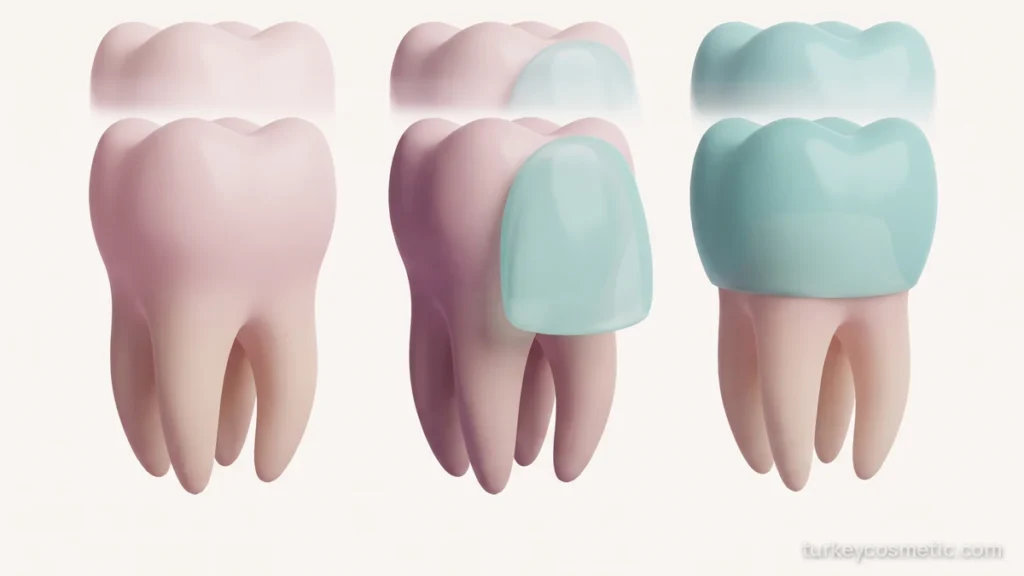
They can be either, and the difference matters more than anything else in this guide. A veneer is a thin shell bonded to the front of a tooth. A crown is a cap that covers the whole tooth. Many people believe they are getting veneers and only later learn that they received crowns.

Veneers vs crowns

Both are permanent. The health of each tooth decides which fits.

FeatureVeneerCrown
What it coversThe front surfaceThe whole tooth
Tooth removedA thin layer of enamel, about 0.3 to 0.7 mmAbout 1 to 2 mm on every side
Best suited toHealthy teeth with colour, shape or small gap concernsBroken, heavily filled or root-treated teeth
Common materialE-max or zirconiaZirconia or E-max
Usual lifespan10 to 15 years10 to 15 years
ReversibleNoNo

Enamel is the hard outer layer of the tooth, and it does not grow back. Tooth preparation means the drilling a dentist does to make room for a restoration. For a veneer, most of the enamel stays. For a crown, the tooth is reduced on all sides.

On a damaged tooth, a crown is the right treatment. On a healthy tooth, it removes sound structure you can never get back. Dentists who answer patient questions online make the same point: a healthy mouth rarely needs a full set of crowns. A few veneers on the front teeth are often enough.

Three things came together: price, speed and social media. A full set in Turkey costs a fraction of private fees in the UK or the US. Clinics finish the work in one trip and often include the hotel and transfers. Influencers then showed their new smiles to millions of viewers.
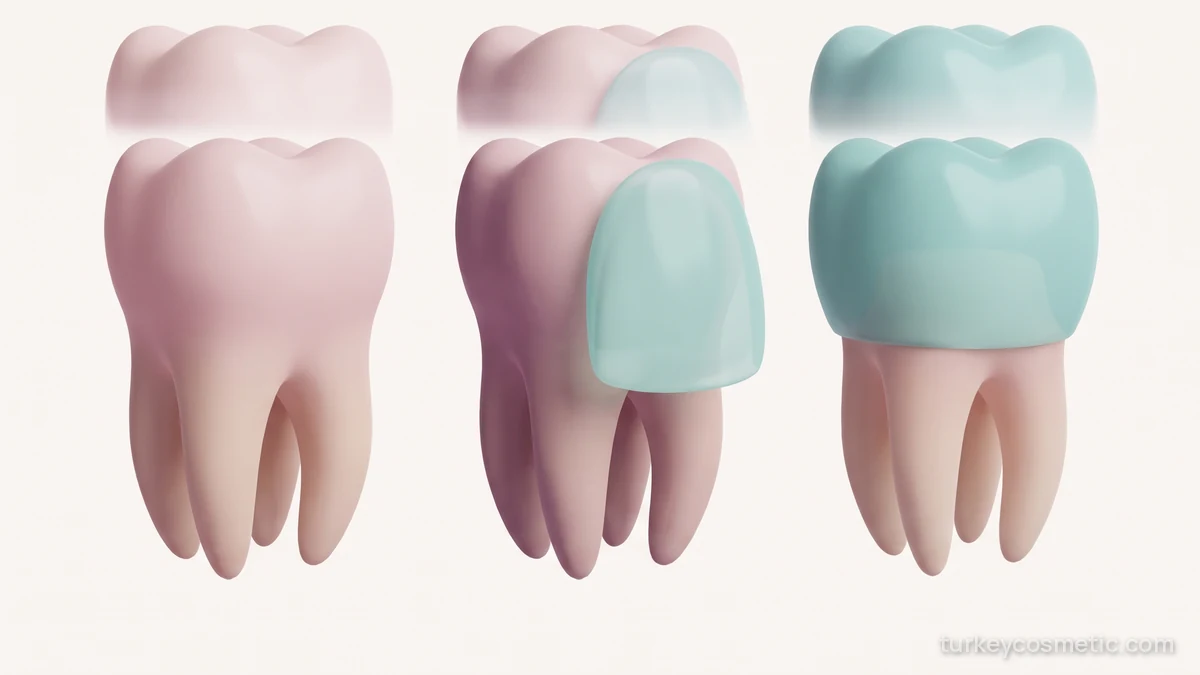
A natural tooth beside a thin porcelain veneer bonded to the front surface and a full crown covering a filed-down tooth

Dental tourism simply means travelling abroad for dental care, and getting new teeth in Turkey is its best-known example. The country has invested heavily in it. Many clinics have modern scanners, their own laboratories and experienced dentists.

Patients on discussion forums often note that people who are happy with their treatment far outnumber the horror stories. Both things are true. Good work is common, and poor work does real harm.

How Much Do Turkey Teeth Cost?

Turkey teeth cost depends on how many teeth are treated and which material is used. Most full-set packages of 16 to 20 veneers or crowns in Turkey fall between £2,150 and £5,900 ($2,900 to $8,000, or €2,500 to €6,900). A comparable set costs several times more at home.
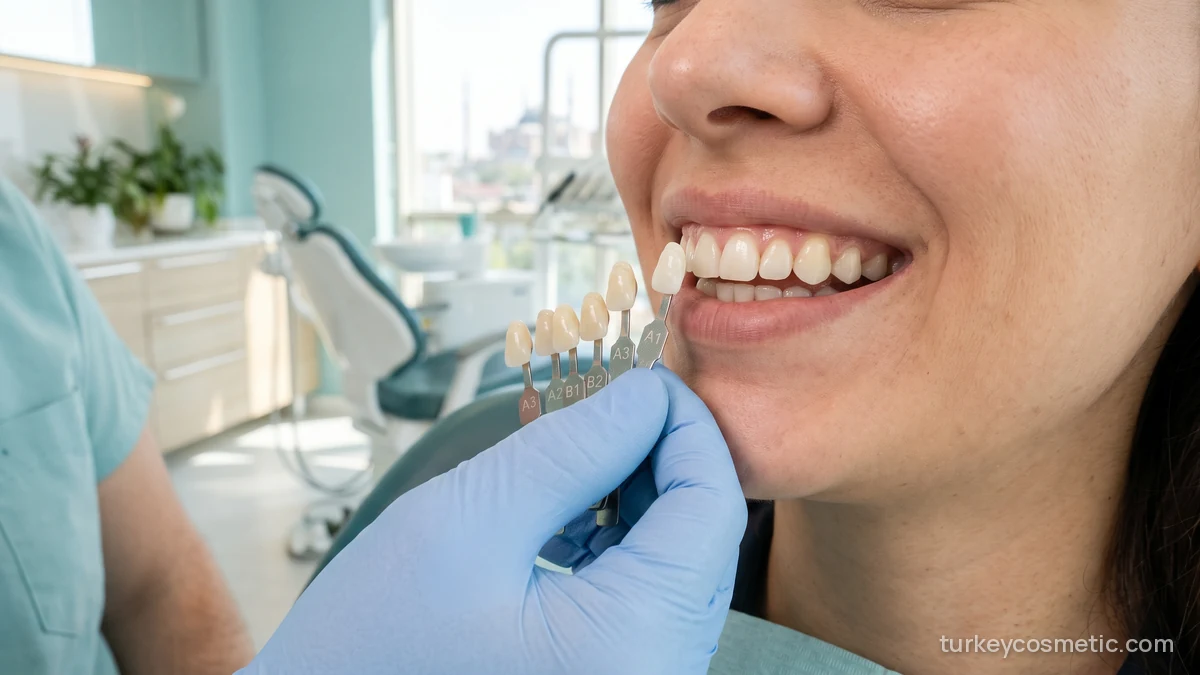
A dentist holding a tooth shade guide next to a patient's smile, mouth and lips only

Full set of 16 to 20 veneers or crownsTypical range
Turkey (most packages)£2,150 to £5,900 / $2,900 to $8,000 / €2,500 to €6,900
United Kingdom (private)£12,000 to £25,000
United States$20,000 to $40,000

These are market ranges taken from published price lists. They are not quotes. Your own Turkey teeth cost depends on your teeth, so ask for a written, itemised quote after a dentist has reviewed your X-rays. Be careful with any firm price given before a dentist has seen your mouth.

What a Turkey Teeth Package Includes

Turkey teeth packages usually bundle the clinical work with travel support. A typical package covers:

  • A consultation and X-rays
  • Tooth preparation under local anaesthetic
  • Temporary teeth while the laboratory works
  • The final veneers or crowns
  • Hotel nights
  • Airport and clinic transfers

Flights are usually extra in Turkey teeth packages. Root canal treatment, gum treatment and dental implants are priced separately. Dental implants are titanium posts that replace missing tooth roots. Check what the warranty covers, and who pays for travel if a repair is needed.

Why Is Dental Treatment Cheaper in Turkey?

Lower wages, rents and laboratory fees explain most of the gap, and the exchange rate helps visitors. High patient numbers also let a dental clinic buy materials in bulk. A lower price does not have to mean lower quality. A very low price, however, can mean rushed work or cheaper materials.

Are Turkey Teeth Safe? Risks to Know Before You Book

Turkey teeth can be safe when the diagnosis is careful, the dentist is qualified and as little tooth as possible is removed. The risk comes from the treatment plan, not from the country. Problems arise when healthy teeth are crowned in a hurry and nobody checks the gums, the bite or the nerves first.

The main risks are:

  • Loss of healthy tooth. Once enamel is drilled away, the tooth will always need a covering.
  • Sensitivity and nerve damage. The pulp is the living nerve and blood supply inside a tooth. Heavy drilling can inflame it. If it does not settle, you need root canal treatment, which removes the nerve and fills the root.
  • Gum inflammation. Crown edges that sit too deep or fit badly trap plaque. The gums become sore and bleed.
  • Bite problems. If the new teeth meet unevenly, you may have jaw ache, headaches or chipped ceramic.
  • Decay under the edges. Poorly sealed margins let bacteria in.
  • Difficult follow-up. If something fails, your clinic is a flight away.

A British Dental Association survey found that most UK dentists had treated complications after dental work abroad. Crowns were the restoration most often involved. These problems are avoidable, but only when the plan is conservative from the start.

Can I Get Turkey Teeth With Gum Disease?

Not until the gum disease is treated. Bleeding gums or loose teeth need care first, because veneers and crowns placed on unhealthy gums fail early. A careful clinic will check your gums and take X-rays before it offers any cosmetic plan.

How Long Do Turkey Teeth Last?

Well-made porcelain veneers and crowns usually last 10 to 15 years, and some last longer. Composite bonding lasts about 5 to 7 years. No restoration is permanent. Each one will need replacing at some point, so a 25-year-old should expect several replacement cycles over a lifetime.
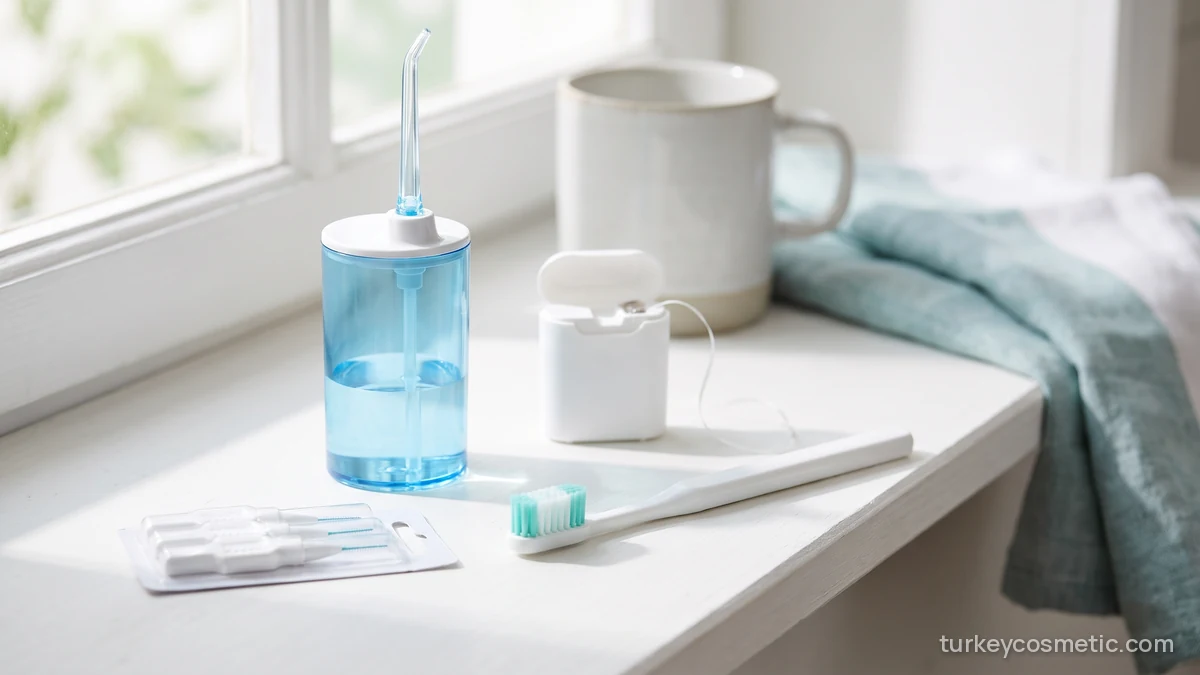
Interdental brushes, floss, a soft toothbrush and a water flosser on a white bathroom shelf

You can help them last:

  • Brush twice a day and clean between your teeth.
  • See a dentist and hygienist regularly.
  • Wear a night guard if you grind your teeth, a habit called bruxism.
  • Avoid biting hard objects such as ice or pen lids.

The Turkey Teeth Procedure, Step by Step

The Turkey teeth procedure, step by step

  1. STEP 1Remote assessmentYou send photos and recent X-rays. Treat any plan at this stage as provisional.
  2. STEP 2Examination in the clinicThe dentist checks your teeth, gums and bite and takes new X-rays or a 3D scan.
  3. STEP 3Smile designShape and shade are planned digitally, and you approve a preview.
  4. STEP 4Tooth preparationYour teeth are shaped under local anaesthetic and a digital impression is taken.
  5. STEP 5Temporary teethYou wear temporaries for a few days while the laboratory makes your veneers or crowns.
  6. STEP 6Try-in and bondingThe dentist checks fit, colour and bite, then bonds the restorations in place.
  7. STEP 7Final checkYour bite is adjusted and you receive aftercare instructions and warranty documents.

Most people stay five to seven days. Treatment that includes dental implants takes two trips, a few months apart, because the bone needs time to heal around the implant.

How to Choose a Dental Clinic in Turkey

The questions below protect you in any country. A good dentist in Turkey will answer them in writing.
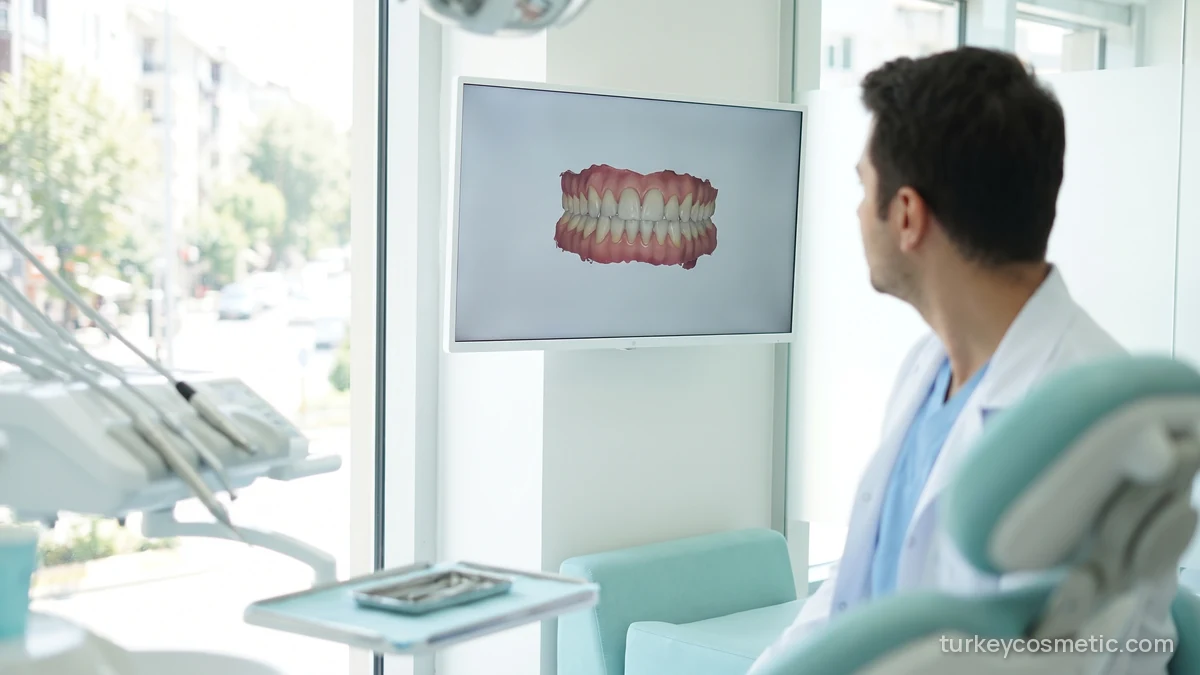
A dentist reviewing a 3D intraoral scan of teeth on a large monitor

  • Is each tooth getting a veneer or a crown, and why?
  • How many millimetres of tooth will be removed?
  • Who is the treating dentist, and what are their qualifications?
  • Is the dental clinic authorised for health tourism by the Turkish Ministry of Health?
  • Which ceramic will be used, zirconia or E-max, and which brand?
  • What does the warranty cover, and who pays for travel?
  • Can I see a preview before any drilling?

Walk away if a clinic recommends 20 crowns from photos alone. Do the same if you are pressed to pay a deposit quickly. A dentist in Turkey who plans carefully will be happy to wait while you get a second opinion at home.

Turkey Teeth Before and After: What Results to Expect

Before and after photos show what a clinic can do, but they are taken on the best day. Ask to see cases like yours, in normal light, and results that are several years old.

A natural result follows your face. The shade suits your skin and the whites of your eyes. The teeth vary slightly in shape and let some light through at the edges. The very white, blocky look that people call Turkish teeth is a choice, not a requirement. Tell your dentist which you prefer before the laboratory starts.

Will a Dentist at Home Look After Turkey Teeth?

Often yes for routine care, but not always for repairs. Many dentists will carry out check-ups and cleaning. Some are reluctant to repair or take responsibility for work they did not place, and public services such as the NHS do not cover cosmetic repairs. Plan your aftercare before you travel.
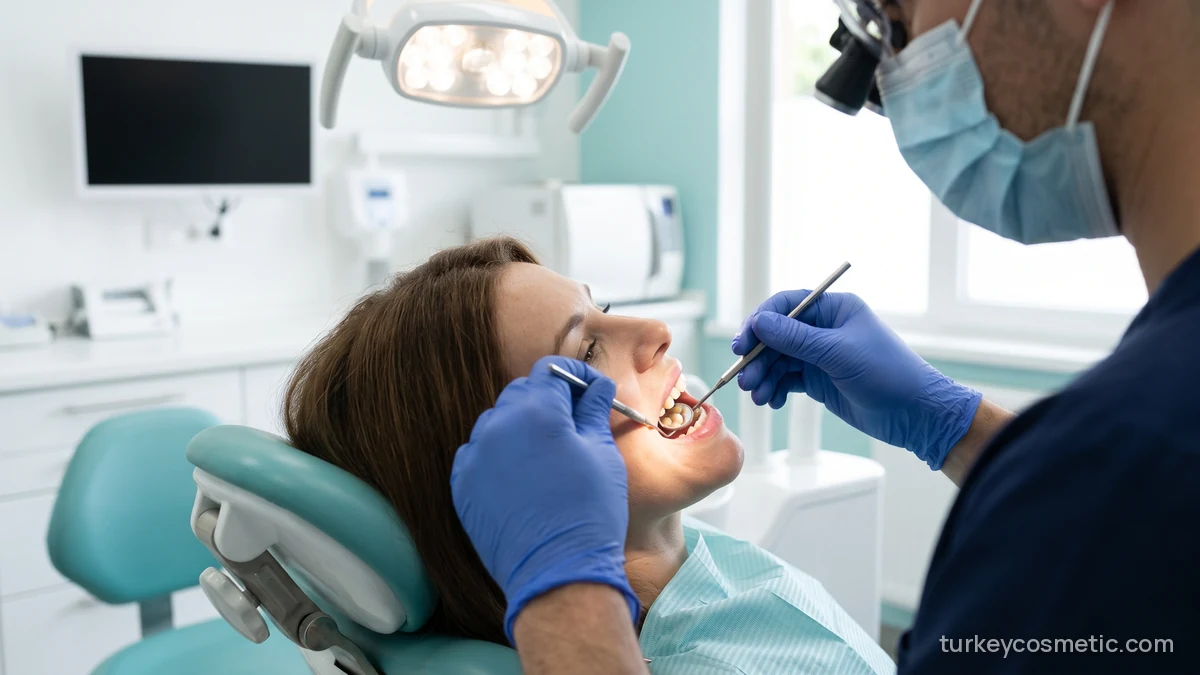
A dentist examining a patient's crowns with a mouth mirror under a dental light

Speak to your own dentist first and ask whether they will see you afterwards. Keep copies of your X-rays, your treatment plan and the material details. Set money aside for a return visit in case you need one.

Alternatives to a Full Set of Crowns

If your teeth are healthy, gentler options may give you the smile you want:

  • Teeth whitening, when colour is the only concern
  • Orthodontics, such as clear aligners, to straighten teeth
  • Composite bonding to repair chips and worn edges
  • Minimal-prep veneers on the front teeth only

A common sequence is to align, whiten and then add composite bonding where it is needed. It takes longer than a week abroad, but it keeps your enamel.

Turkey teeth as one package

Clinical work and travel support in one price

  • ConsultationAnd X-rays
  • Tooth preparationUnder local anaesthetic
  • Temporary teethWhile the laboratory works
  • Veneers or crownsThe final restorations
  • HotelHotel nights
  • TransfersAirport and clinic
Full set in Turkey (most packages)£2,150–£5,900
UK private£12,000–£25,000

Ask for a written treatment plan and warranty before you pay.

Some patients combine dental work with other treatment in Istanbul. Our guides to hair transplant in Turkey and laser eye surgery in Turkey explain what to check before you book.

Frequently Asked Questions

Do Turkey teeth hurt?

The preparation is done under local anaesthetic, so you should feel pressure but not pain. Afterwards, some sensitivity to hot and cold is common for a few days or weeks. Pain that throbs, wakes you at night or gets worse is not normal. Contact your dentist promptly if that happens.

Do they shave your teeth for Turkey teeth?

Some tooth is removed in almost every case. For veneers it is a thin layer from the front surface. For crowns the whole tooth is reduced, which creates the peg shape seen online. Ask your dentist which you are having and how much will be removed, in millimetres.

Can Turkey teeth be reversed?

No. Enamel does not grow back, so a prepared tooth will always need a veneer or crown. Restorations can be replaced with a better shape or a more natural shade, but the tooth underneath cannot be restored. This is why the first treatment plan matters so much.

How much do Turkey teeth cost in pounds?

Most full-set Turkey teeth packages of 16 to 20 veneers or crowns cost between £2,150 and £5,900. A similar set at a private UK practice usually costs £12,000 to £25,000. The final figure depends on the number of teeth, the material and any extra treatment you need.

Why are Turkey teeth so white?

Because patients often choose the brightest bleach shades on the chart. The ceramic can be made in any colour. A shade that matches the whites of your eyes and has some translucency looks far more natural. Ask to compare shade samples against your face before you decide.

Get your Turkey Teeth plan · reply in your language