Treatment guide

Tummy Tuck Turkey: Cost, Recovery and Safety

Updated Kasım 26, 2026 · 15 min read
Tummy Tuck Turkey

Quick answer

A tummy tuck in Turkey removes loose skin and fat from the abdomen and tightens the stomach muscles under general anaesthesia. Most packages cost £2,200 to £4,800 (about $2,900 to $6,500), far less than UK or US prices. Plan to stay seven to ten days and allow about six weeks for recovery.

Key takeaways

  • Surgery takes two to four hours, with one or two nights in hospital.
  • UK prices run from £6,500 to £14,000 and US prices from $8,000 to $20,000.
  • UK guidance advises waiting at least seven to ten days before you fly home.
  • You wear a compression garment for about six weeks. The final shape shows at three to six months.
  • Blood clots, fluid build-up and wound problems are the main risks, so aftercare at home matters as much as the surgery.

Tummy tuck Turkey searches have grown fast, and it is easy to see why. Prices are lower, waiting times are short and many hospitals are modern. But a tummy tuck is major surgery, and travel adds extra steps. This guide explains how a tummy tuck Turkey trip works, with honest price ranges, a recovery plan and the safety checks that matter most.

What Is a Tummy Tuck?

A tummy tuck, also called abdominoplasty, is an operation that removes loose skin and extra fat from the abdomen. The surgeon also tightens the stomach muscles when they have stretched or moved apart. The aim is a flatter, firmer tummy. It is not a way to lose weight.

Pregnancy, major weight loss and ageing can stretch the skin and muscles so far that exercise no longer helps. Doctors call a gap between the two long stomach muscles diastasis recti. A tummy tuck closes that gap with strong stitches. It also removes stretch marks on the skin that is cut away, below the belly button.

Why Choose Turkey for a Tummy Tuck?

Most patients choose Turkey for three reasons: lower prices, short waiting times and packages that bundle the hospital, the hotel and the transfers. Surgery there often costs less than half the UK or US price. Many Turkish surgeons also do body-shaping operations every week.
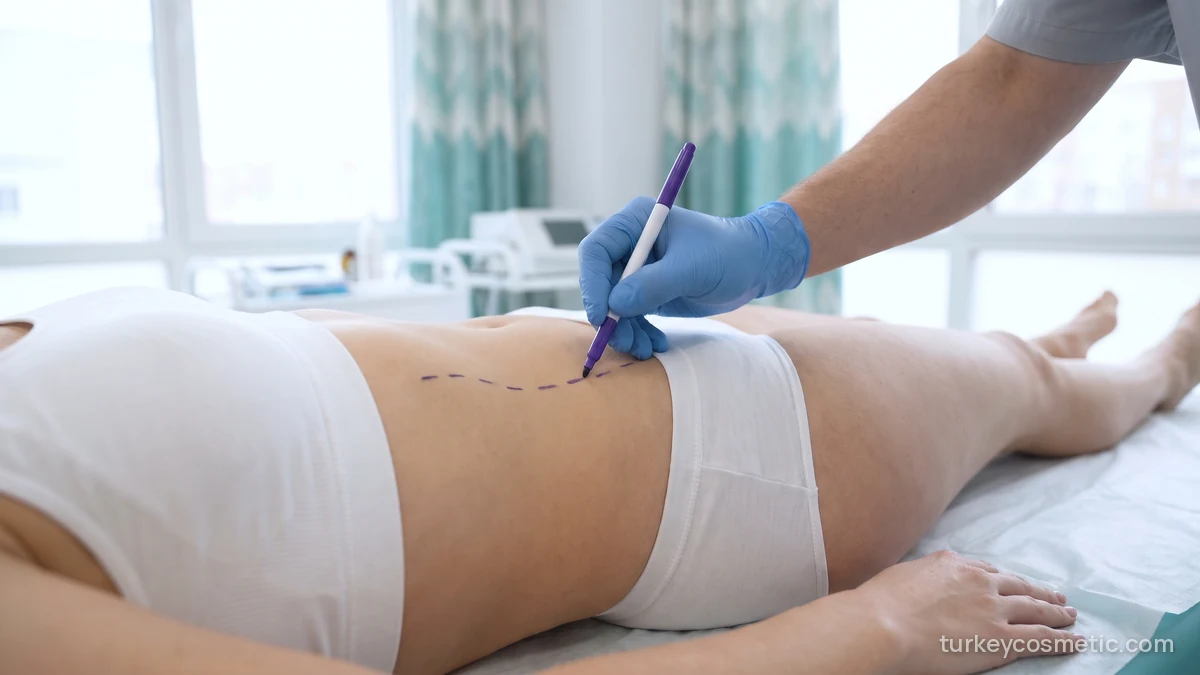
A surgeon in blue gloves drawing dashed tummy tuck marking lines on the lower abdomen of a woman in white high-waisted briefs

Abdominoplasty in Turkey is well established. Large private hospitals in Istanbul, Izmir and Antalya treat patients from abroad every day, and many hold international accreditation such as JCI. A lower cost does not mean a lower risk, though. Standards vary, and you will be far from your surgeon once you fly home.

Am I a Good Candidate for a Tummy Tuck?

You are likely to be a good candidate if you are healthy and close to a stable weight. The problem should be loose skin or a bulge that diet and exercise have not fixed. Most surgeons prefer a body mass index (BMI) under 30.
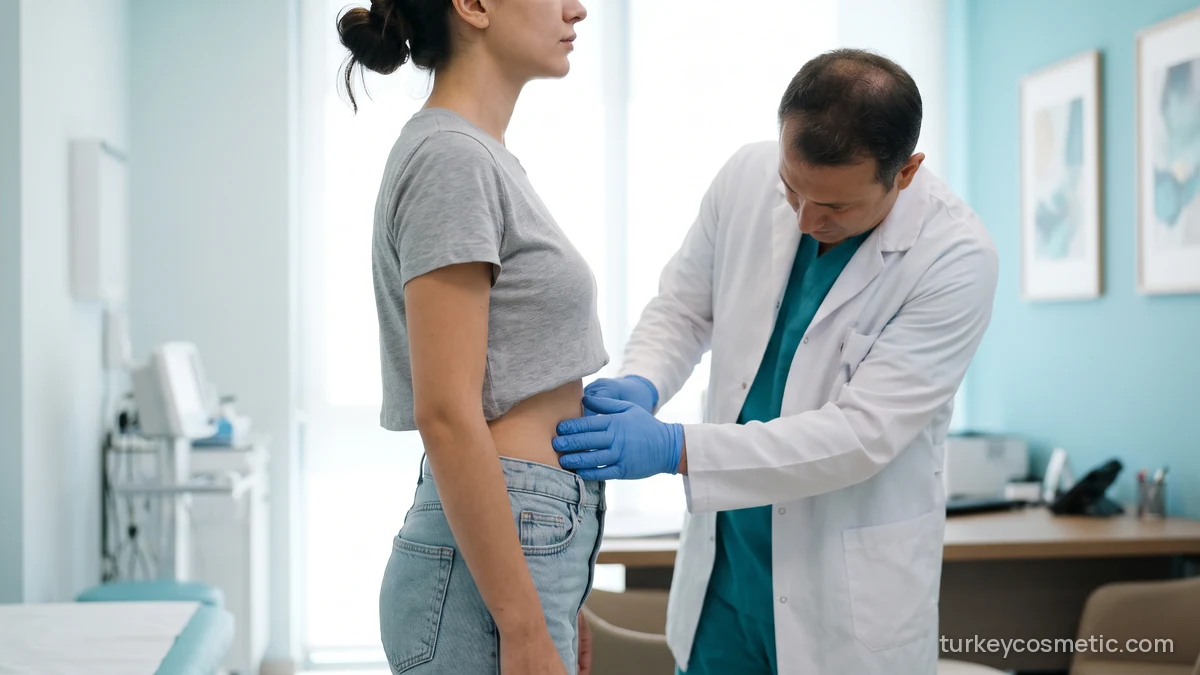
A woman in a cropped grey top standing in profile while a plastic surgeon assesses her lower abdomen

Good candidates usually:

  • have kept a steady weight for at least six months.
  • do not smoke, or can stop for four weeks before and after surgery.
  • have no poorly controlled diabetes, heart disease or lung disease.
  • accept that a scar is part of the result.

Who is not suitable for a tummy tuck?

Surgeons usually say no, or ask you to wait, if you:

  • plan a pregnancy in the next year or two.
  • have a BMI well above 30.
  • are still losing weight after weight-loss surgery.
  • have had blood clots or take blood thinners, unless a specialist has cleared you.

If your main concern is fat and not loose skin, liposuction in Turkey alone may suit you better.

What Are the Different Types of Tummy Tucks?

There are four main types: mini, full, extended and fleur-de-lis. They differ in how long the scar is, whether the muscles are repaired and how much skin comes away. Your surgeon picks the type after examining you, not from a price list.

Mini tummy tuck

A mini tummy tuck treats only the area below the belly button. The scar is shorter and recovery is quicker. A mini tummy tuck Turkey package suits people with a small pouch of loose skin and good muscle tone.

Full tummy tuck

This is the standard operation. The cut runs from hip to hip, low enough to hide under underwear. The surgeon repairs the muscles, removes the excess skin and brings the belly button out through a new opening.

Extended tummy tuck

The scar carries on round towards the back to treat loose skin on the flanks. A cut that goes all the way round the body is called a circumferential or 360 tummy tuck.

Fleur-de-lis tummy tuck

This type adds a vertical scar up the middle of the abdomen. It tightens the skin from side to side as well, and is used mainly after very large weight loss.

Tummy tuck combined with liposuction

Surgeons often add liposuction to the waist or flanks to refine the shape. Be careful about adding several other procedures in one sitting, such as breast surgery in a mommy makeover. Longer operations carry a higher risk of blood clots and wound problems.

Types of tummy tuck compared

TypeScarMuscle repairBest for
MiniShort and low.Lower muscles only, if needed.A small pouch below the belly button.
FullHip to hip, plus round the belly button.Yes.Loose skin above and below the belly button.
ExtendedHip to hip and round the flanks.Yes.Loose skin on the tummy and sides.
Fleur-de-lisHip to hip, plus a vertical scar.Yes.Very large weight loss.

How Is a Tummy Tuck Performed?

A tummy tuck is performed in hospital under general anaesthesia, which means you are fully asleep. A full tummy tuck takes two to four hours, and you usually stay one or two nights. The main steps are the same at home or abroad.
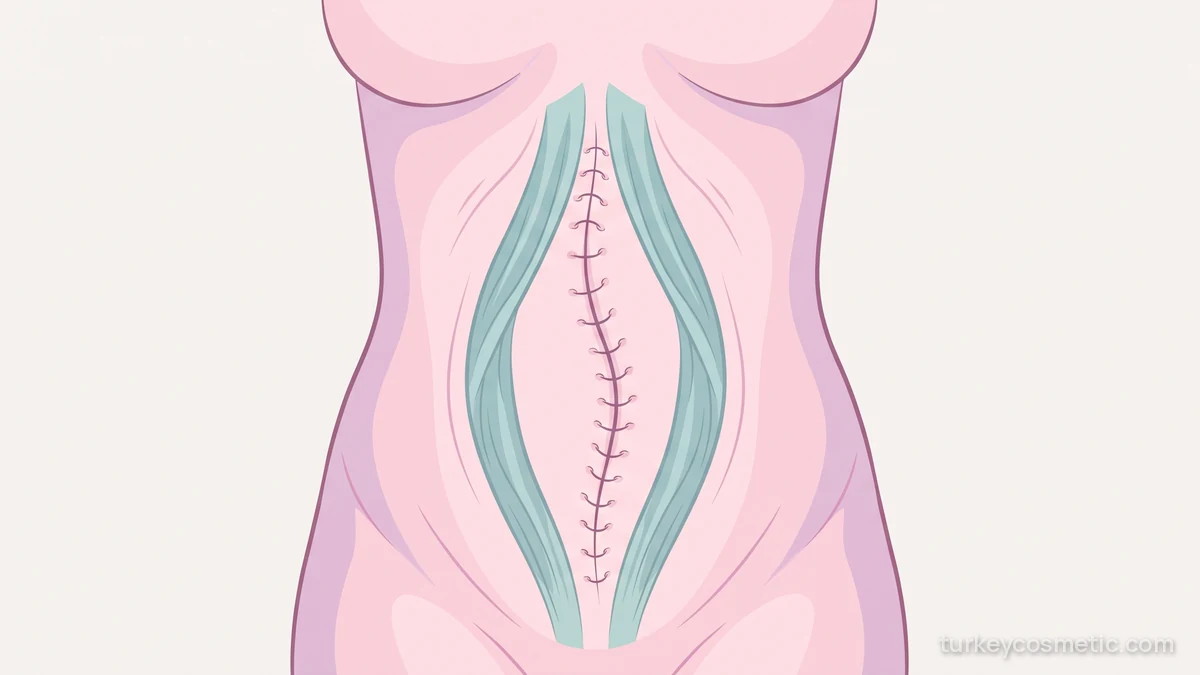
Front view of a female abdomen showing separated rectus abdominis muscles being stitched together in the midline

  1. Checks and marking. You have blood tests and meet the surgeon and the anaesthetist. The surgeon draws the plan on your skin.
  2. Incision. The surgeon makes a low cut between the hips. A full tummy tuck needs a second cut round the belly button.
  3. Muscle repair. The stomach muscles are stitched together in the middle.
  4. Skin removal. The skin is pulled down and the excess is trimmed.
  5. Closure. The wound is closed in layers. Thin tubes called drains may remove fluid for a few days.
  6. Recovery ward. You wake in a compression garment. Gentle walking starts within a day.

Tummy Tuck Turkey Cost: How Much Is a Tummy Tuck in Turkey?

Most tummy tuck packages in Turkey cost between £2,200 and £4,800, or about $2,900 to $6,500. The same operation usually costs £6,500 to £14,000 in the UK and $8,000 to $20,000 in the US. Your own price depends on the type of surgery, the surgeon and the hospital.

If you search for tummy tuck cost Turkey or tummy tuck price Turkey, you will see figures that differ by thousands. A mini tummy tuck Turkey quote sits near the bottom of the range. Extended and fleur-de-lis operations sit near the top. Treat any figure as a guide and ask for a written, itemised quote.

What is included in a tummy tuck package?

Most quotes for abdominoplasty in Turkey cover:

  • the surgeon, the anaesthetist and the hospital fees.
  • blood tests and checks before surgery.
  • one or two nights in hospital.
  • a hotel for the rest of your stay.
  • airport and clinic transfers.
  • the compression garment and your medicines.

Flights are usually extra. Ask in writing who pays if you need a longer stay or more treatment.

Tummy tuck cost Turkey vs UK vs US

CountryTypical rangeWhat it usually covers
Turkey£2,200 to £4,800 ($2,900 to $6,500).Surgery, hospital stay, hotel and transfers in most packages.
UK£6,500 to £14,000.Surgery and hospital stay.
US$8,000 to $20,000.Surgery, anaesthesia and facility fees.

These ranges come from clinic and hospital prices published in 2026. Your own quote may differ.

Why is a tummy tuck cheaper in Turkey?

The lower tummy tuck Turkey cost comes mainly from lower wages, rents and hospital running costs, helped by the exchange rate. Strong competition between clinics also keeps prices down. A low price does not prove low quality. But a price far below the usual range should make you ask what has been left out.

Tummy Tuck Turkey Itinerary: How Many Days Do You Need?

Plan for at least seven to ten days in Turkey. That allows a day for tests, one or two nights in hospital and several days of checks before you fly. Patients from the US, or anyone with a long-haul flight, should lean towards ten to fourteen days.
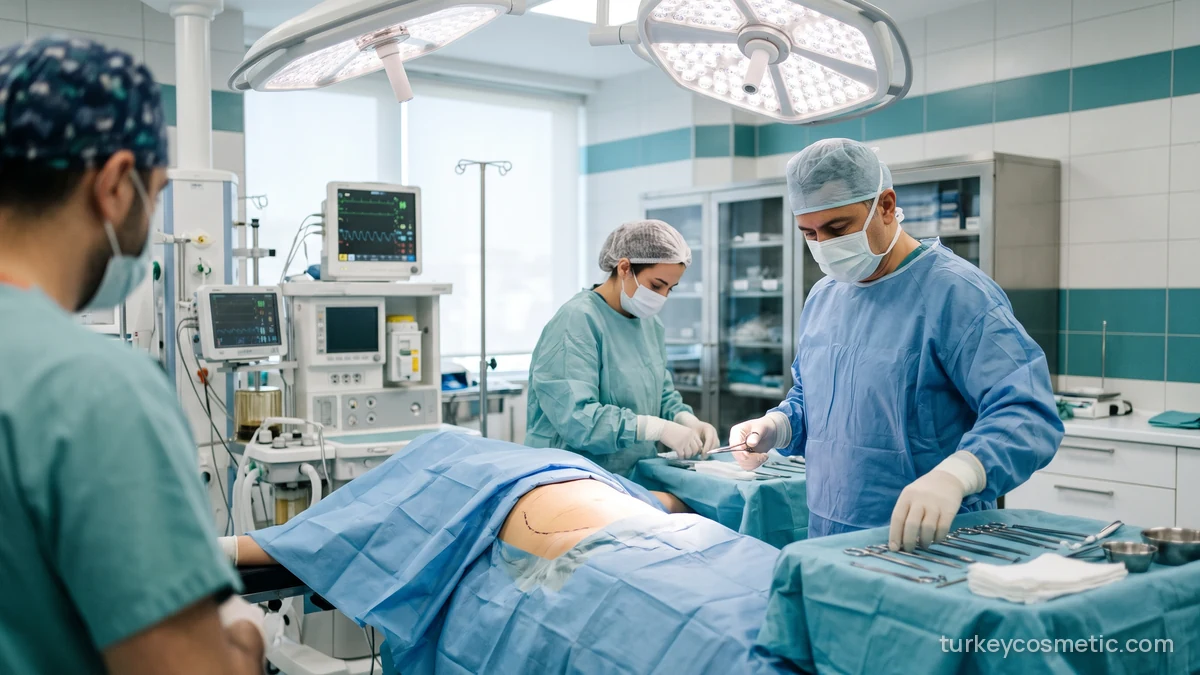
A surgical team in a modern operating theatre preparing for abdominoplasty under bright surgical lights

  1. Before you travel. You have an online consultation, send photos and receive a written quote.
  2. Day 1. You arrive, transfer to the hotel and rest.
  3. Day 2. You meet the surgeon, have blood tests and then have surgery.
  4. Days 3 and 4. You stay in hospital, take your first walks and move to the hotel.
  5. Days 5 to 7. Nurses change your dressings. Drains come out if they were used.
  6. Days 8 to 10. You have a final check, collect a fit-to-fly letter and fly home.

Bring a companion if you can. Do not plan abdominoplasty in Turkey around a holiday, because sun, sea and long walks do not mix with a fresh wound.

How Long Does It Take to Recover from a Tummy Tuck?

Most people need about six weeks to recover from a tummy tuck. You can usually go back to desk work after two to three weeks and to full exercise after six to eight weeks. The final shape shows at three to six months.
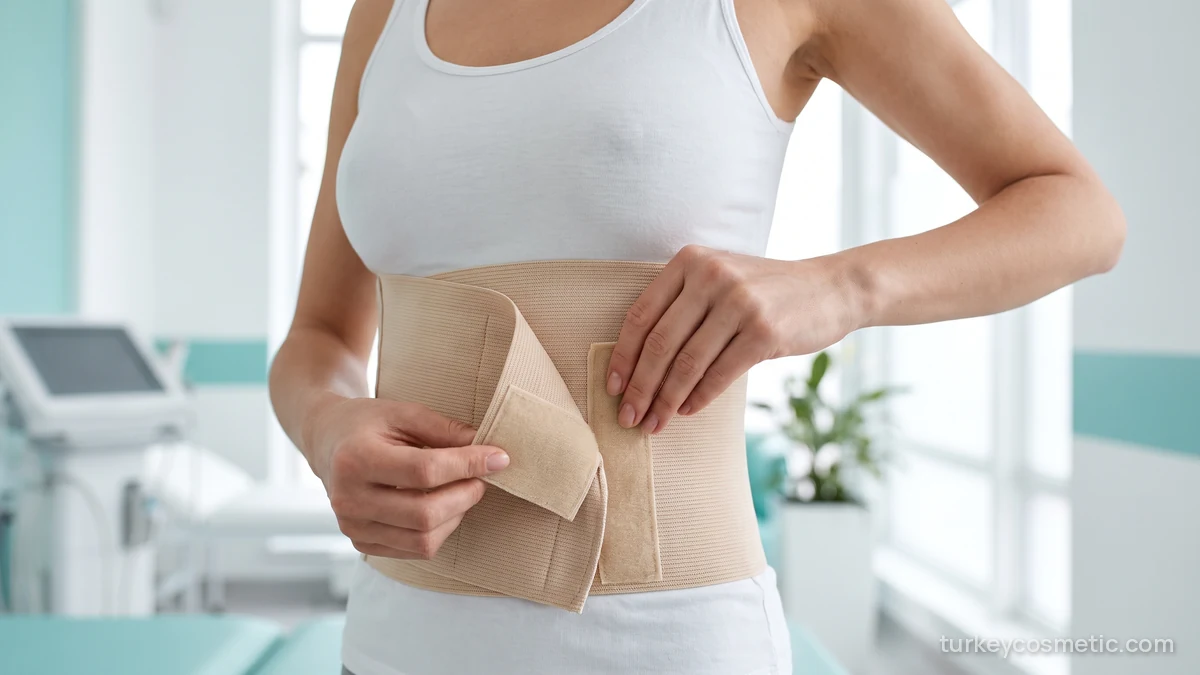
A woman wearing a beige abdominal compression binder over a white vest, adjusting the velcro

Tummy tuck recovery timeline

  1. DAYS 1 TO 3Your tummy feels tight and sore. You walk slightly bent.
  2. WEEK 1Drains come out. You wear the compression garment day and night.
  3. WEEKS 2 AND 3You stand straighter. Desk work is possible.
  4. WEEKS 4 TO 6Swelling eases. You can drive. No heavy lifting yet.
  5. WEEKS 6 TO 8The garment comes off. Exercise returns step by step.
  6. MONTHS 3 TO 6The final shape appears. The scar starts to pale.

Abdominoplasty recovery goes more smoothly when you keep moving. Short, frequent walks protect you from blood clots. Sleep with your knees and upper body raised for the first two weeks. Do not smoke, because nicotine starves the healing skin of blood. Swelling, called oedema, often gets worse by the evening. That is normal.

When Can You Fly Home After a Tummy Tuck in Turkey?

Most surgeons clear patients to fly seven to fourteen days after a tummy tuck, once the drains are out and the wound is healing well. UK guidance from the NHS and BAAPS advises waiting at least seven to ten days. For a long-haul flight, a longer wait is safer.
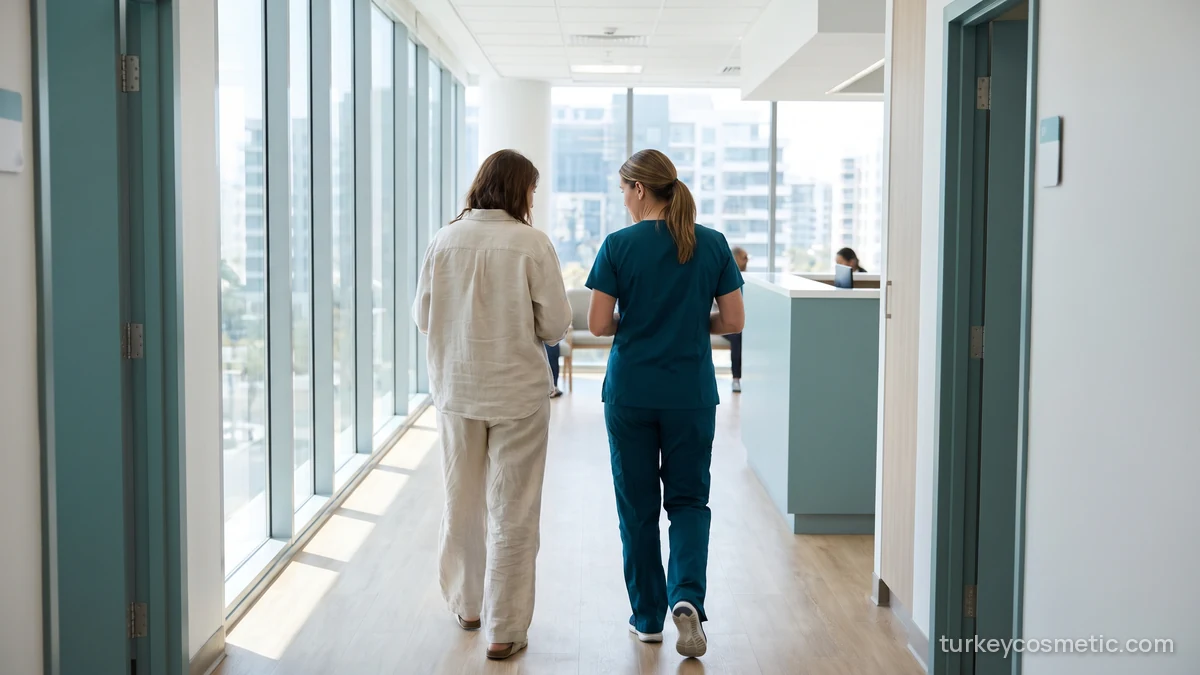
A woman in loose clothes slightly bent forward walking slowly along a bright hospital corridor with a nurse

The main worry is a blood clot in the leg, called deep vein thrombosis (DVT). Surgery and long hours of sitting both raise the risk. A clot can travel to the lungs, which is an emergency known as pulmonary embolism. To lower the risk on the flight:

  • wear compression stockings.
  • walk the aisle every hour and flex your ankles in your seat.
  • drink plenty of water and skip alcohol.
  • ask your surgeon whether you need a blood-thinning injection before you fly.

Does flying make swelling worse?

Flying does not harm the result. Cabin pressure can make swelling a little worse for a day or two, and it then settles. Get urgent help if you notice calf pain, one swollen leg, chest pain or shortness of breath.

What Are the Risks and Complications of a Tummy Tuck?

Every tummy tuck carries risks, wherever it is done. The most common problems are fluid build-up under the skin (seroma), bleeding, infection and slow wound healing. Less common but serious risks include blood clots and loss of skin, called necrosis. Smoking and a high BMI raise the risk.

  • Seroma. Fluid may need draining with a needle.
  • Haematoma. A collection of blood may need a second trip to theatre.
  • Wound separation. Part of the scar opens, most often in the middle.
  • Numbness. The lower tummy often feels numb for months.
  • Scar problems. Scars can be thick or uneven, and a few patients need a small revision.

UK plastic surgeons report that tummy tucks make up a large share of the problems they treat after surgery overseas. Most are infections and wounds that open once the patient is home. So your aftercare plan deserves as much attention as the surgery.

What happens if you have a problem after you get home?

Contact your clinic and send clear photos, then see a doctor in person. Go to an emergency department if you have a fever, spreading redness, pus, chest pain or trouble breathing.

In the UK, the NHS treats emergencies, but it does not usually correct cosmetic results. In the US, follow-up care is often paid out of pocket. Many surgeons are slow to take over another surgeon’s case. So find a local doctor who agrees to see you before you travel, and ask the clinic for an operation report in English. Standard travel insurance rarely covers planned surgery.

Is It Safe to Have a Tummy Tuck in Turkey?

Surgery in Turkey can be safe when a qualified plastic surgeon operates in an accredited hospital and you stay long enough for proper checks. Safety depends on the provider you choose, not on the country. A tummy tuck abroad adds two risks: flying soon after surgery and being far from your surgeon.

Safer choices look like this:

  • The operation takes place in a full hospital with intensive care.
  • You speak to the surgeon, not only to a sales agent, before you pay.
  • The team checks your medical history and blood tests, and is willing to turn you down.
  • You receive a written plan for clot prevention and for aftercare at home.
  • Nobody pushes you to book today or to add more operations.

How to Choose a Tummy Tuck Surgeon in Turkey

Start with the surgeon, not the package. Your surgeon should be a specialist in plastic, reconstructive and aesthetic surgery. Membership of the Turkish Society of Plastic, Reconstructive and Aesthetic Surgeons (TSPRAS) or the International Society of Aesthetic Plastic Surgery (ISAPS) is a good sign. The clinic should also hold a health tourism authorisation certificate from the Turkish Ministry of Health. Our guide to plastic surgeons in Turkey explains these checks.

Where is the best place for tummy tuck in Turkey?

There is no single best city. Istanbul has the widest choice of hospitals and the most direct flights. Izmir and Antalya also have large accredited hospitals. When you compare tummy tuck Istanbul providers, judge the surgeon and the hospital, not the hotel. A tummy tuck Istanbul package with a five-star hotel is not safer than a plain one.

What should you ask before you book?

  • How many tummy tucks do you perform each year?
  • Which hospital will I be in, and is it accredited?
  • What do you do to prevent blood clots?
  • How long must I stay before I fly?
  • Who do I contact at night, and who will see me at home?
  • What is your revision policy, in writing?

Tummy Tuck Turkey Before and After: What Results Can You Expect?

You can expect a flatter, firmer abdomen, a tighter waist and a low scar that fades with time. Results last if your weight stays stable. Early photos mislead, because swelling hides the shape for weeks. Judge before and after pictures taken at least three months after surgery.

When a clinic shows you photos, look for patients with a body shape like yours. Check the scar position, the belly button and the side view. Ask whether the photos show the work of the surgeon who will operate on you. Be wary of heavily edited images.

Tummy Tuck in Turkey Reviews: How Should You Read Them?

Read reviews for detail, not for star ratings. Useful reviews describe the consultation, the hospital, the pain control and what happened after the patient went home. Look for reviews written months after surgery on independent platforms. Be careful with praise that appears only on a clinic’s own website.

Notice how a clinic replies to unhappy patients. Every surgeon has complications. A clinic that answers openly and offers follow-up is more reassuring than one with only perfect scores. People who had a tummy tuck abroad often say the weeks at home were harder than the days in hospital.

Tummy tuck in Turkey as one package

What most quotes cover

  • SurgerySurgeon, anaesthetist and hospital fees
  • TestsBlood tests and checks before surgery
  • HospitalOne or two nights
  • HotelFor the rest of your stay
  • TransfersAirport and clinic
  • Garment and medicinesCompression garment included
Most packages in Turkey£2,200–£4,800
UK private surgery£6,500–£14,000

Treat any figure as a guide and ask for a written, itemised quote.

If you are thinking about other surgery, our guides to labiaplasty in Turkey and facelift in Turkey cover cost, recovery and risks in the same way.

Frequently Asked Questions

Is 23 too young for a tummy tuck?

Age matters less than your health and your plans. Most surgeons will operate on an adult who is at a stable weight, in good health and has a real problem with loose skin or separated muscles. If you plan a pregnancy soon, it is better to wait.

Can you have a baby after a tummy tuck?

Yes. A tummy tuck does not stop you getting pregnant or carrying a baby safely. But pregnancy stretches the skin and muscles again, so some of the result may be lost. For that reason, surgeons advise you to finish your family first.

Are tummy tuck scars permanent?

Yes, the scar is permanent, but it fades. It is red and raised for the first months. It then flattens and pales over twelve to eighteen months. Surgeons place it low so that underwear covers it. Silicone gel, sun protection and not smoking help it settle.

Can a hernia be fixed with a tummy tuck?

Often, yes. A small hernia near the belly button, called an umbilical hernia, can usually be repaired during the same operation. Tell your surgeon in advance so that the repair can be planned. A larger hernia may need a general surgeon or a separate operation first.

Should I get a tummy tuck or liposuction?

It depends on the problem. Liposuction removes fat, but it does not tighten loose skin or repair muscles. A tummy tuck does both, at the price of a scar and a longer recovery. If your skin is firm and fat is the main issue, liposuction may be enough.

Can you have a tummy tuck after a gastric sleeve?

Yes, and it is a common request. Wait until your weight has been stable for at least six months, which is usually a year or more after weight-loss surgery. Your blood tests should show good protein and iron levels, because low levels slow healing.

Would you like a personal assessment? Send us your photos and medical history and ask for a written, itemised quote.

Get your Tummy Tuck Turkey plan · reply in your language